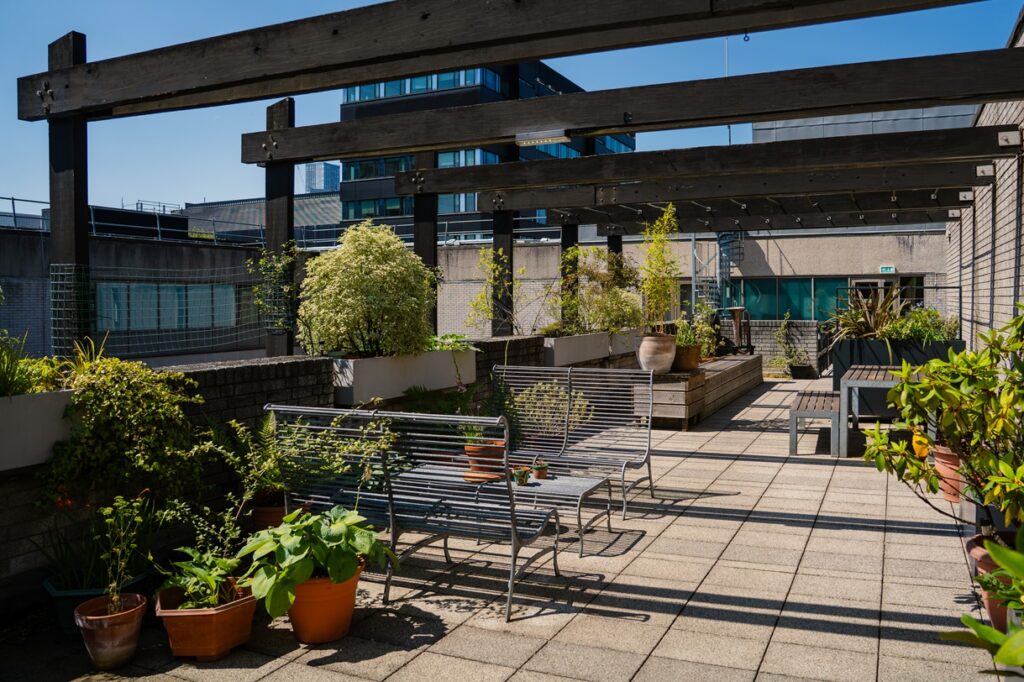
Environmental Responsibility
Environmental sustainability is a priority for the RNCM and a key part of our vision for the future.
We are committed to placing climate and environmental considerations at the heart of our decision-making, while using the power of music to inspire awareness, dialogue, and positive change. This commitment is shared across our community, from staff and students to audiences and professional partners.
From innovative artistic programming and curriculum development to decarbonisation projects, waste reduction initiatives and student-led activity, we are committed to reducing our environmental impact while helping to shape a more sustainable future for the arts sector
Carbon Management
We recognise that higher education institutions like the RNCM have a responsibility to minimise their environmental impact and to support the transition to a low-carbon future through both operational improvements and behavioural change.
Our Carbon Management Plan provides a framework for measuring, monitoring, and reducing carbon emissions across the estate. By understanding where emissions are generated, we can identify opportunities to improve efficiency, reduce waste, and make more sustainable use of resources across our estate and operations.
Over recent years, we have invested in a range of initiatives designed to lower energy consumption and improve environmental performance. These include upgrades to building management systems, improvements to lighting and heating infrastructure, and the adoption of more energy-efficient technologies. We continue to monitor energy use closely and seek opportunities to reduce consumption while maintaining a high-quality environment for learning, performance and work.
Carbon reduction is also considered as part of our wider approach to procurement, travel, waste management, and future infrastructure development. We work with suppliers and partners where possible to encourage sustainable practices and support lower-carbon ways of working throughout the organisation.
Achieving meaningful reductions in carbon emissions requires engagement across the entire RNCM community. Staff and students play an important role in supporting our environmental objectives, and we continue to promote awareness of sustainable behaviours that can contribute to long-term change.
Through a combination of targeted investment, careful planning, and collective action, we aim to reduce our carbon footprint, improve environmental performance, and contribute positively to the RNCM’s wider sustainability ambitions and the goals of the Greater Manchester region.
Sustainability within RNCM Food and Drink
At the RNCM, we’d like the quality of our food and drinks to leave a lasting impression on you, not on the environment.
We take steps to ensure that we’re operating in a sustainable, environmentally responsible way in everything that we do in our Café Bar and events we host.
Suppliers and Produce
- We practise sustainable procurement by purchasing products through TUCO. The TUCO framework uses suppliers, brands and businesses who meet specific sustainability requirements.
- Produce is purchased from ethical sources including Fairtrade, free-range, Marine Conservation Society, Red Tractor and Rainforest Alliance. We also prioritise local suppliers where possible to support community businesses and reduce food miles.
- Our coffee supplier Cafeology is an independently owned coffee company who purchase direct from coffee growers in Central and Southern America, ethically and responsibly sourced to minimise the impact on the environment.
- A SMART menu is in place where we use the same ingredients across numerous dishes. We constantly review our menu and remove less popular dishes in order to reduce wastage. We also buy non-perishable items in bulk.
Utensils and Cups
- Single-use plastic glasses are no longer provided from the Concert Bar for those taking drinks into our auditoriums and have been replace with branded, reusable half and pint cups from Happy Cups.
- The café sells an RNCM branded Keep Cup and offers a discount on each hot drink purchased when you bring your own reusable cup. This saves per year (based on an average of how many reusable cups are used at the Café Bar each week) approximately 2400 single-use cups, 7kg of plastic, 54kg of timber and 88kg of carbon dioxide.
- The takeaway hot drink cup that we offer is 100% recyclable, which means no part of it needs to be separated in order for it to be recycled. The paper material yield after recycling can vary depending on the quality of the paper processing mill, but after the recycling of our cups we expect a 97.9% yield of recycled material for reuse.
- Our next step is to reduce the number of papers cups used. The RNCM (in conjunction with University of Manchester and Manchester City Council) is piloting a returnable cup scheme to reduce our reliance on disposable cups. The cups are deposit free, and customers will only pay for the cup if they decide not to return it within 14 days.
- We have replaced our plastic takeaway cutlery with wooden or composable plant-based options.
Plant-Based Options
- Approximately 26% of our Cafe Bar Menu is vegan and we have a dedicated vegan section in our grab and go fridge. We also provide a range of alternative milks.
Waste Management
The RNCM follows the Guardians of Grub six ways to save food waste:
- Smart Ordering: Checking stock and purchasing only what’s needed. Buying smaller portions of fresh produce, ordering more often. Supporting local to get fresh seasonal produce that lasts longer.
- Savvy Storage: First in, first out! Storing newer items at the back to ensure older items are used first. Labelling and dating new supplies as they come in. Using airtight containers or cling film to keep ingredients fresh – or freezing them.
- Smart Menu: Exploring ways of using the same ingredients for different dishes. Using cooking methods for meat, fruit and vegetables and herbs that make the most of ingredients. Being creative by using leftover ingredients and offcuts.
- Essential Skills: Empowering staff and training them on how to throw away less food safely. Reviewing preparation schedules and food handling procedures. Removing less popular or time consuming dishes from our menus.
- Right Portion Sizes: Offering portion size and side dish options as well as takeaway doggy boxes.
- Engage Customers: Letting our customers know about the work we’re doing to save food from being thrown away and asking what they think. Finding out what food they don’t like and leaving it out of their food.
Our waste cooking oil is turned into biodiesel, thus reducing energy consumption and food waste. We employ Filtafry, whose cooking oil recycling services naturally preserve the environment by extending the life of cooking oil.
Our food waste is transformed into renewable energy (10,368 KWH per annum) and nutrient-rich biofertilizer (12 tonnes per annum) through our partnership with ReFood, the UK’s top provider of renewable energy from food waste. This initiative also reduces the Catering team’s CO2 emissions by approximately 7 tonnes each year.
We have recycled old furniture from the café by donating it to other organisations rather than sending it to landfill.
Our chopping boards are regularly swapped out for a resurfaced set using the Nella Cutlery resurfacing service. This saves money, ensures we are food safe and reduces plastic waste.
We continue to commit to cutting out all single-use plastics as part of the joint pledge with other Greater Manchester Universities, Manchester University NHS Foundation Trust and Further Education Colleges, and if using plastic ensure it is 100% recyclable and where possible made from recycled plastic.
Waste Management
The RNCM is committed to reducing its environmental impact by minimising packaging waste, maintaining high rates of recycling and landfill diversion, and embedding sustainable practices across its operations. This includes reducing, reusing, and recycling materials in opera productions, implementing robust waste management plans for construction projects, and lowering water consumption through investment in efficient technologies. Looking ahead, we will continue to explore innovative solutions, including rainwater and greywater recycling, as part of future infrastructure developments.
Environmental Literacy
We are also committed building environmental awareness across our community by promoting sustainability education, communication, and engagement. Through carbon literacy training, staff are equipped to act as sustainability champions within their areas of work, while regular updates are shared with staff and students via the website, intranet, and virtual learning environment. In addition, the RNCM supports participation in national environmental campaigns and promotes sustainable travel through initiatives such as Bike to Work Week and the work of the Corridor Manchester Sustainable Travel Group, encouraging the use of public transport for business travel wherever feasible.
Resources
-
Sustainable Food Framework
Visit