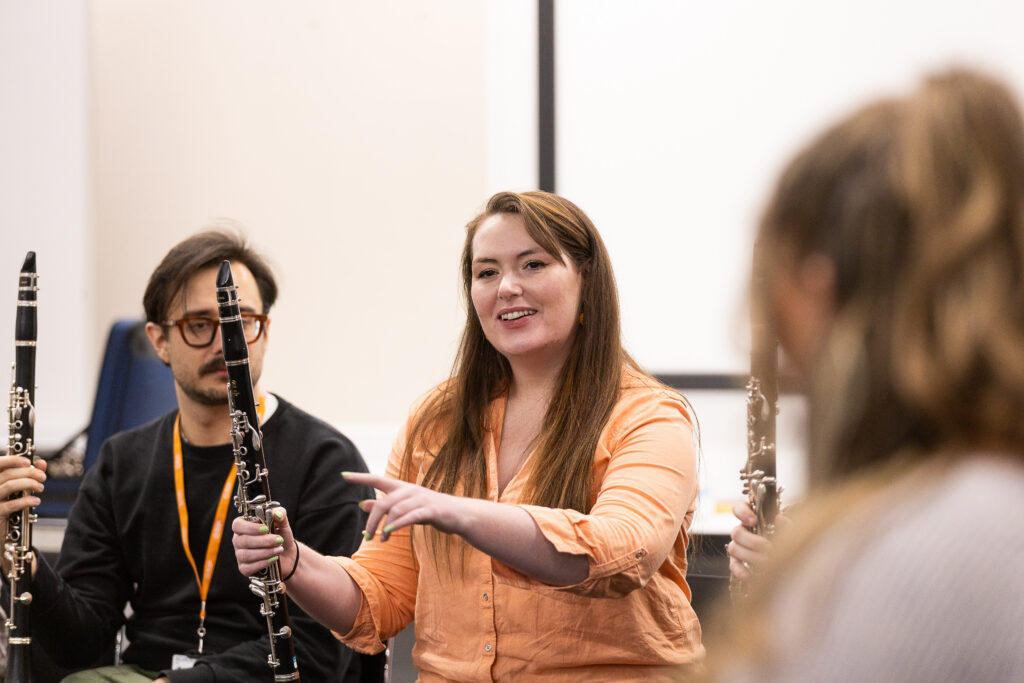
Bachelor of Arts Education with Honours in Inclusive Music Education
At the RNCM, we believe that music has the power to change lives, and that those who teach, lead, and facilitate music‑making play a vital role in unlocking that power.
Our new BAEd (Hons) in Inclusive Music Education is your opportunity to become one of those changemakers.
Designed for curious, socially engaged, and forward‑thinking musicians, this three‑year programme builds musicianship alongside skills in teaching, leading education work, and creating music education projects. It brings together rigorous academic study and hands‑on creative practice, helping you explore how music shapes people, cultures, and communities, while developing the confidence and expertise to inspire the next generation through meaningful, inclusive musical experiences.
Key Information
- Duration
- 3 years full time
- Credits
- 480
- Course Code
- 401F
- Application Opens
- 9 Jul 2026
- Application Deadline
- 13 Jan 2027
- Fees
- Fee guide
Entry Requirements and Applications
Age, Qualifications and Standards
Entrance to the RNCM BAEd (Hons) programme is dependent on the following:
- Applicants who are not from a majority English-speaking country (as defined by UKVI) must obtain an overall IELTS score of 5.5, with a minimum score of 5.5 in every component.
- All applicants must be at least 18 years of age on 31 December in the year of entry.
- A range of qualifications are accepted for this programme:
- A-levels: All applicants must achieve ABB-BCC at GCE A level (A2), including Music or Music Technology and a humanities subject or English Language.
- BTECs, V-levels (for example Education), T-levels, and international equivalents are accepted and will be assessed on an individual basis.
- Suitable equivalents for A-level music are accepted and will be assessed on an individual basis. Please contact [email protected] for more information on equivalents and alternative qualifications.
- All applicants must have achieved a pass or higher in Grade 8 practical or performance, or equivalent on any instrument.
- All applicants must have achieved a pass or higher in Grade 5 Music Theory.
- All applicants must pass an RNCM interview prior to entry, demonstrating academic suitability to the course.
Alternative Qualifications
Candidates with Scottish, Irish or other international qualifications, and those with alternatives such as BTEC, should contact Admissions on 0161 9075 465 or email [email protected].
How to Apply
Submit an application via UCAS Conservatoires, using course code 401F, by Wednesday 13 January. Please select your preferred interview method within your application (in person or online).
Prepare the following written piece, which you will be asked to submit via Acceptd.
Thinking about your own music education, can you give an example of what inspired you to continue with your music? In no more than 500 words, please tell us:
What is it that inspired you?
Describe the activity: this could be an ensemble that you played/sang with, a particular performance you gave, a performance that you attended, an artist or musician that you follow, your school music lessons.
Who inspired you?
Who were the people involved? These could be teachers, other musicians, parents. Describe how they helped you.
How did it inspire you?
What was it about the activity that inspired you: this could be how it made you feel, what opportunities it provided, did it lead on to other things.
Why did it inspire you?
Why do you think this activity and the people involved inspired you so much?
What does this tell you about music teaching?
What have you learnt from this activity and the way it inspired you that you would like to take forward into your future work as a music educator?
Complete and submit your Acceptd application by Friday 29 January.
Your application will be reviewed and if you are shortlisted, you will be invited to a live interview. This will take place in person at the RNCM or online via Microsoft Teams, depending on the preference you selected within your UCAS application.
After you have completed your interview, you will receive a notification of your application outcome via UCAS Conservatoires, followed by an email from our Admissions Team.
Programme Details
Core elements include: understanding education and policy – why we teach and how we teach in an inclusive way – along with exploring music’s impact on society; developing practical skills in leading and facilitating music making in different school and community contexts; developing an understanding of music in context across a range of repertoires, performance traditions, and cultural or historical settings; and preparing for a career in music education.
Supporting studies include non‑assessed instrumental or vocal lessons on a main instrument or keyboard, taught by RNCM postgraduate performance students. Co‑curricular opportunities include contributing to RNCM Engage activities such as RNCM Pathfinder, RNCM Engage Brass, RNCM Engage Cumbria, RNCM Young Artists, and RNCM Young Projects.
Module Map
Ideas in Music, Education and Society
Explore why and how we teach, and examine music’s wider impact on individuals, communities, and society.
Facilitating Music Making 1
A practical module that introduces the core skills needed to teach and lead group music‑making with confidence.
Music in Context 1
Gain an understanding of music within a range of repertoires and performance traditions, developing awareness of how music functions in different cultural settings.
Theory and Musicianship 1
Develop practical musicianship through active music‑making and build the theoretical knowledge that supports effective teaching.
Professional Development 1
A career‑focused module that introduces key skills and knowledge for future work in music education.
Supporting studies include non-assessed instrumental/vocal lessons on a main instrument or keyboard, peer taught by RNCM postgraduate performance students. Co-curricular opportunities include supporting RNCM Engage activities, such as: RNCM Pathfinder, RNCM Engage Brass, RNCM Engage West Cumbria, RNCM Young Artists, and RNCM Young Projects – Schools.
Music Education and Cultural Policy in Practice
Explore cross‑cultural approaches to music education and cultural policy, gaining insight into how national and local structures shape teaching and learning.
Facilitating Music Making 2
A practical module that extends your skills, focusing on creating your own teaching resources and culminating in arranging and rehearsing a piece for a beginner ensemble.
Music in Context 2
Develop your understanding of music in context by exploring conventions, traditions, and a range of themes that influence musical practice in different cultural and historical settings.
Theory and Musicianship 2
Build on the foundations of Year 1, deepening practical musicianship and theoretical skills to support arranging and teaching.
Professional Development 1
A career‑focused module that continues to prepare you for work in music education, with an emphasis on project management, funding applications, and leading teams of teachers and assistants.
Supporting studies include non-assessed instrumental/vocal lessons on a main instrument or keyboard, peer taught by RNCM postgraduate performance students. Co-curricular opportunities include supporting RNCM Engage activities, such as: RNCM Pathfinder, RNCM Engage Brass, RNCM Engage West Cumbria, RNCM Young Artists, and RNCM Young Projects – Schools.
Education Experience
Gain practical experience in an education setting, applying and refining your teaching skills in real‑world contexts.
Enquiry
Undertake a project that allows you to research an area of personal interest that supports your development as an educator.
Electives
Choose two elective modules that explore different musical and educational themes, allowing you to tailor your study to your interests.
Supporting studies include non-assessed instrumental/vocal lessons on a main instrument or keyboard, peer taught by RNCM postgraduate performance students. Co-curricular opportunities include supporting RNCM Engage activities, such as: RNCM Pathfinder, RNCM Engage Brass, RNCM Engage West Cumbria, RNCM Young Artists, and RNCM Young Projects – Schools.
Your Application
Applications for most RNCM programmes open in July and should be submitted using UCAS Conservatoires and Acceptd. The application process includes a number of stages, including an audition and interview.
Professors and Lecturers
-

Jennie Henley
Director of Programmes
-
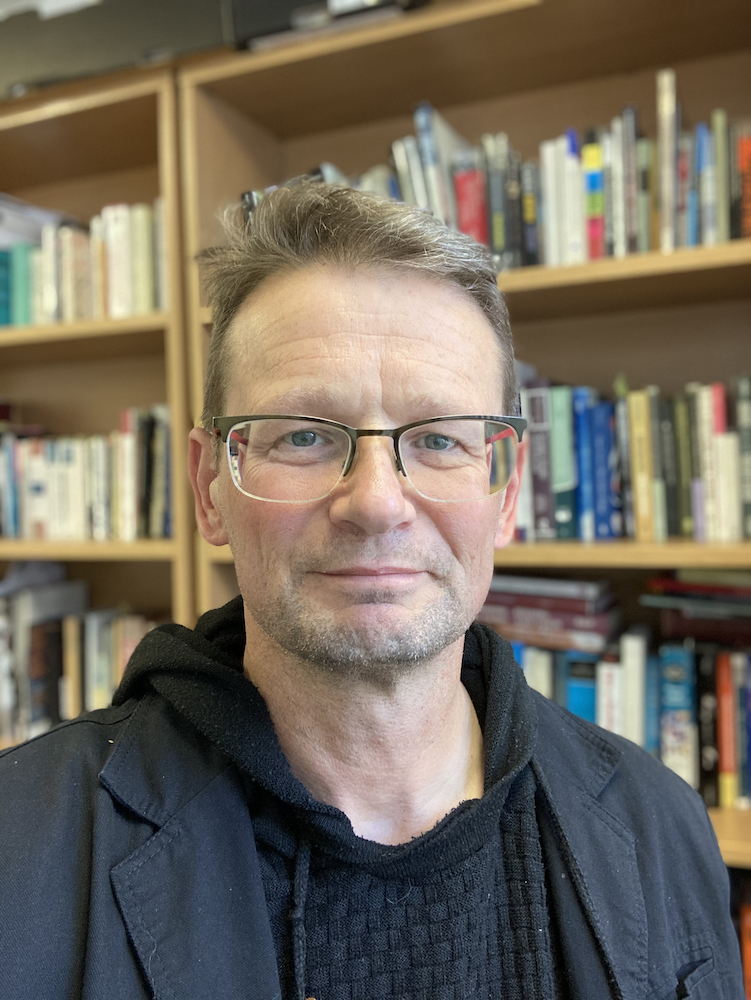
Nicholas Reyland
Professor of Music and Head of Undergraduate Programmes
-

Annika Forkert
Senior Lecturer in Music and Deputy Head of Undergraduate Studies
-

Simon Parkin
Senior Lecturer in Music and Deputy Head of Undergraduate Programmes
Staff Spotlight
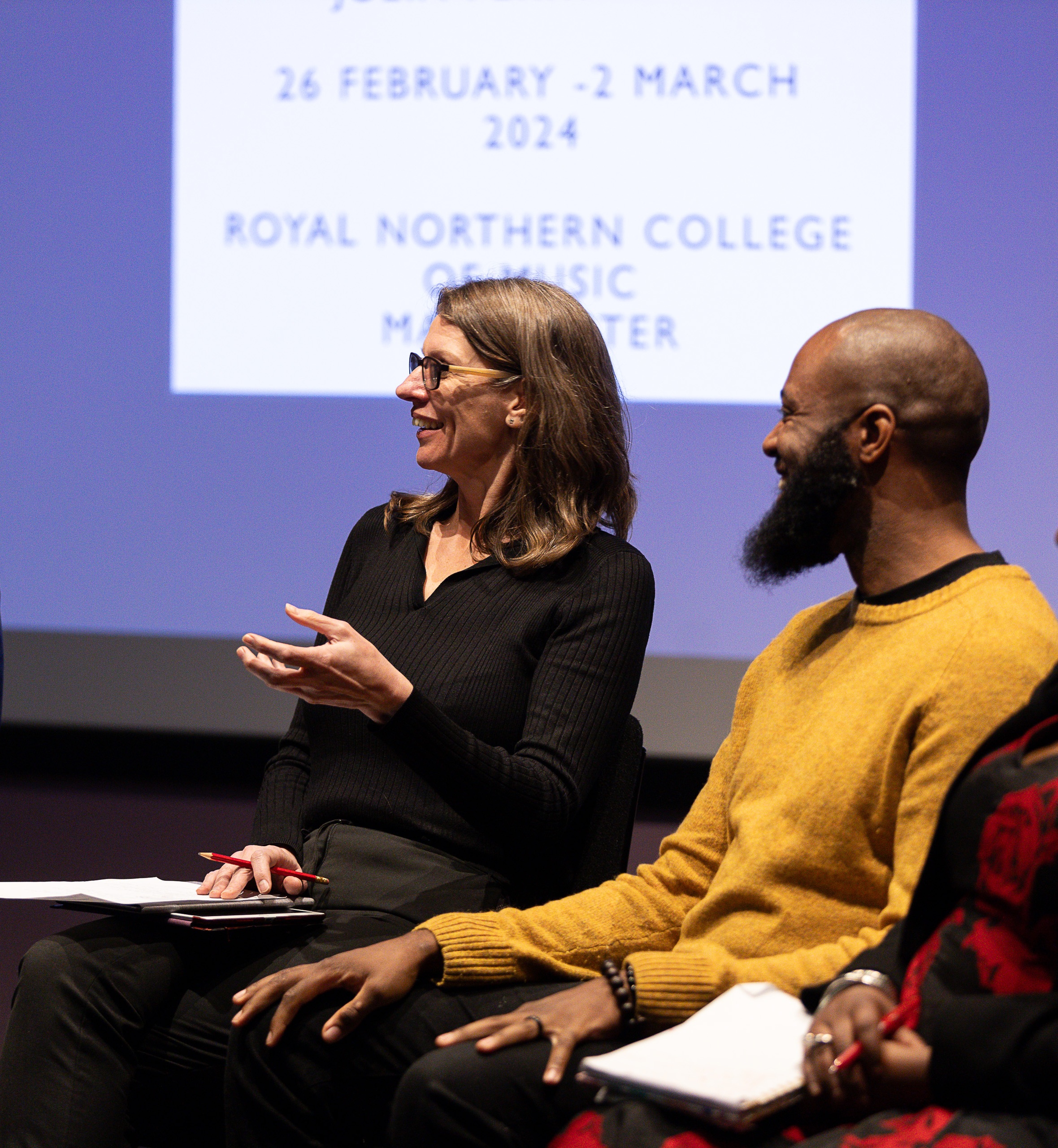
Professor Jennie Henley | Director of Programmes
‘Music connects people, it builds confidence, and it gives a different way for children and young people to learn how to work together, express themselves, and build emotional resilience.
‘As a child who grew up on state benefits in receipt of free school meals, then as a working musician and teacher for the past 30 years, I’ve seen the difference music can make to children, young people, and young adults from the most difficult backgrounds.’
Professor Jennie Henley is Director of Programmes at the RNCM and author of Inclusive Pedagogy in Music Education (Routledge, 2026).
Additional Information
Accommodation
All applicants who accept a guaranteed offer before X February will be reserved a room in Sir Charles Groves Hall of Residence, which they will be invited to book in the months following their audition. Private en-suite rooms are grouped in clusters of four with shared kitchen facilities.
Scholarships and Bursaries
All applicants are automatically considered for a scholarship, and these are awarded based on performance ability and potential demonstrated at audition and interview. Scholarship awards are for the first year of study only (unless specifically stated otherwise).
A limited number of bursaries are also available for International and postgraduate students, allocated based on need and merit. If you’re successful in gaining a bursary, this will be deducted from your tuition fees, leaving you with a net balance to pay.
Undergraduate home students may apply for an Access Bursary if their income meets the published criteria. To apply for an Undergraduate Access Bursary, please contact Student Finance England (or the relevant local authority for your country). You need to apply as an income assessed student and you and your sponsors (usually your parents) need to consent to share their household income with the RNCM.
Tuition Fees
Tuition fees are split into two categories – home and international. Your fee status will be determined by the information provided within your UCAS Conservatoires application. Full guidance on tuition fee statuses can be found on the UKCISA (UK Council for International Student Affairs) website, but if you have any queries or think you have been assigned an incorrect status, please email [email protected] and we would be happy to undertake a full fee assessment with you.