Bachelor of Music with Honours
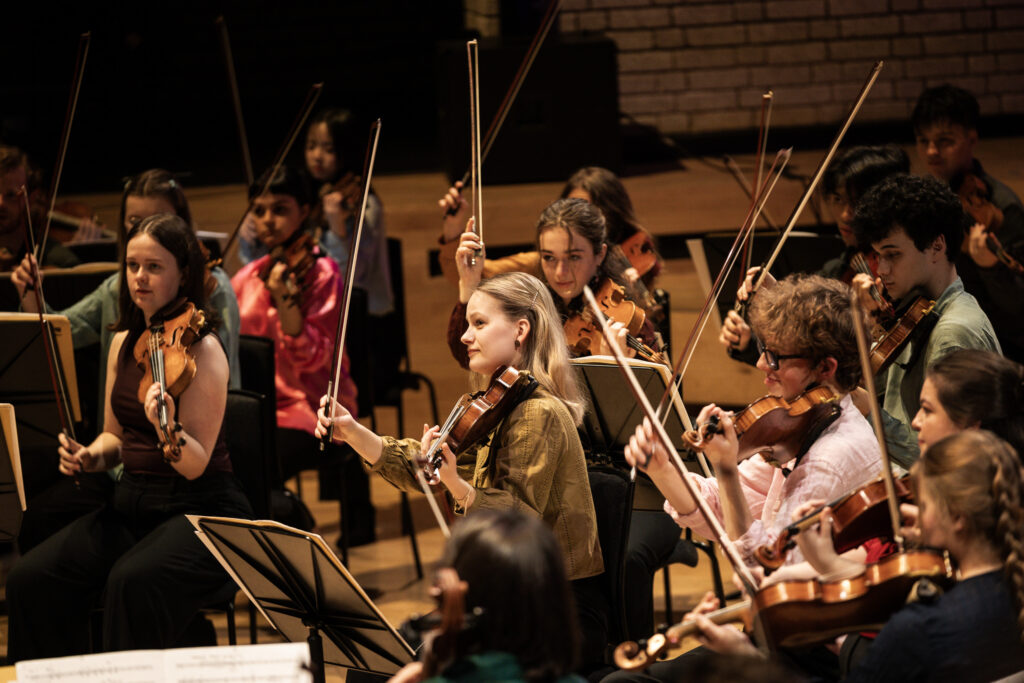
The RNCM Bachelor of Music with Honours (BMus Hons) degree supports the education of creative, inquisitive, well-rounded musicians, complementing your passion for performance or composition with academic and professional training to the highest standard.
With a clear emphasis on success, fulfilment, and musical wellbeing, the programme provides the freedom to focus on areas key to your progression, helping you to master the skills needed to build and enjoy a career that shapes tomorrow’s industry.
Please note that direct entry to Year 2 is available to a limited number of exceptional candidates who demonstrate outstanding academic and practical ability during their audition and interview, and who hold a HE Level 4 qualification in music performance on entry (such as DipABRSM).
Key Information
- Duration
- 3-4 years full time
- Credits
- 480
- Course Code
- 300F
- Application Opens
- 9 Jul 2026
- Application Deadline
- 1 Oct 2026
- Fees
- Fee guide
Entry Requirements
4 Year Programme
Entrance to the RNCM BMus (Hons) programme is dependent on the following:
- All applicants must be at least 18 years of age on 31 December in the year of entry.
- All applicants must have passes at GCE A level (A2) in a minimum of two subjects at grade E or above, normally including music, and passes in three different subjects at GCSE level (grades A*-C/9-4) or acceptable equivalent.
- Applicants who are not from a majority English-speaking country (as defined by UKVI) must have IELTS 5.5 or equivalent in each and every component (or CEFR B2).
- All applicants must pass an RNCM audition in the year prior to entry, demonstrating a high standard of performance (or composition ability for composers) and potential, of at least ABRSM Grade 8 standard.
- UK applicants may be required to undertake an Enhanced DBS (Disclosure and Barring Service) Check to participate in some professional placement modules within this course. Applicants from countries other than the UK, or UK residents who have spent six months or more in any non-UK country within five years of the course start date must additionally provide a police certificate of good conduct from the relevant country.
3 Year Programme
(direct entry to Year 2)
Applicants for direct entry to Year 2 should apply for the standard four-year BMus (Hons) via UCAS Conservatoires.
Direct entrance to Year 2 is dependent on the following:
- All applicants must be at least 18 years of age on 31 December in the year of entry.
- All applicants must have passes at GCE A level (or equivalent) in at least three different subjects, normally including music, at grades AAB.
- Applicants who are not from a majority English-speaking country (as defined by UKVI) must have IELTS 7.0 or equivalent in each and every component (or CEFR C1).
- All applicants must pass an HE Level 4 Diploma in Music Performance, normally in the Principal Study instrument. This must be achieved by 30 April prior to September entry. Diplomas will be assessed as to suitability for credit transfer and must contain elements that reflect Year 1 of the programme. Performance-only diplomas with no musicology or musicianship elements, such as detailed programme notes or viva, will not be eligible for credit transfer.
- All applicants must pass an RNCM audition in the year prior to entry, demonstrating a high standard of performance (or composition ability for composers) and potential, of at least BMus Year 1 standard.
- All applicants must pass an RNCM Interview of 20 minutes.
- UK applicants may be required to undertake an Enhanced DBS (Disclosure and Barring Service) Check to participate in some professional placement modules within this course. Applicants from countries other than the UK, or UK residents who have spent six months or more in any non-UK country within five years of the course start date must additionally provide a police certificate of good conduct from the relevant country.
Alternative Qualifications and Direct Entry
(Accreditation of prior learning)
International applicants, candidates with Scottish or Irish qualifications, and those with alternatives such as a BTEC or NVQ, should contact Admissions on 0161 9075 465 or email [email protected].
Candidates who have undertaken relevant qualifications/modules at a recognised Higher Education Institution, and who wish to be considered for direct entry into Year 2 onwards of the BMus programme, should contact Admissions for guidance before submitting an application. In the first instance, please email details of your prior learning (summary of educational background and copies of transcripts) to [email protected].
Programme Details
Three complementary components sit at the heart of the BMus (Hons): Principal Study, Career Development (including placements and projects), and Academic Studies. Students also have the chance to develop emerging specialisms through optional practical and vocational electives.
Principal Study Options
- Baritone Horn
- Bassoon
- Cello
- Clarinet
- Composition
- Cornet
- Double Bass
- Euphonium
- Flute
- French Horn
- Guitar (classical)
- Harp
- Harpsichord
- Oboe
- Percussion/Timpani
- Piano (solo)
- Saxophone
- Singing
- Tenor Horn
- Trombone
- Trumpet
- Tuba
- Viola
- Violin
Forming the foundation of the programme, principal study focuses on enabling you to realise your true potential, both technically and creatively, through one-to-one tuition, group classes, masterclasses, and many additional creative and performance opportunities.
Whether you’re studying one principal study discipline or choosing to divide your tuition between two areas of specialism, you’ll work closely with your tutor(s) to develop a learning pathway that’s right for you. This will include personal goals, areas of strength, areas for development, repertoire planning, study materials, and methodologies tailored to challenge and develop you to the appropriate level.
You’ll also learn how to critically evaluate and perform a broad range of repertoire, inspiring a cultural connection between historic, contemporary, and progressive material. And – with an emphasis on peer learning and peer support – you’ll be encouraged to develop your own musical voice through composition and performance, to reflect, analyse, and draw on your wide scholarly activities, and to engage in constructive critique.
Module Map
Principal Study 1 (40 credits)
Weekly one‑to‑one lessons developing core instrumental, vocal, or composition skills.
Ensembles 1 (20 credits)
Designed to foster creative musical collaborations and develop initiative, teamwork, and commitment.
Chamber groups are formed in collaboration with the Head of Piano Chamber Music and the Head of Strings Chamber Music (for instrumentalists), and with the Deputy Head of Opera (for singers). Composers develop their collaborative skills through working with creative artists in art forms such as dance and film.
Regular tuition is delivered by a designated tutor and masterclasses with visiting artists, and students are additionally expected to rehearse together weekly. All ensembles are given frequent opportunities to perform and, where appropriate, compete in the RNCM’s chamber music prizes.
Artist Development 1 (20 credits)
Introduction to reflective practice, creative identity, and professional skill‑building. Through a series of lectures, seminars, and workshops, you’ll engage with relevant themes for your development as a musician, artist, and global citizen, with a view to supporting a sustainable and rewarding career. You’ll also examine the different situations facing today’s musicians and the role of skills such as creativity within a holistic outlook, encompassing reflection on all areas of your RNCM activity.
Areas to be explored may include creativity and its social, cultural, and financial values; how to reflect on personal skillsets and imagine future career options; the practicalities of being a professional musician, such as personal budgeting and generating an income; and the role of health and wellbeing in a rewarding professional life. You’ll also develop practical skills useful to a career in music, such as self-recording techniques and the production of audition/social media videos.
Music in Context 1 (20 credits)
Students are inspired to contextualise, review, and diversify their knowledge of Western art music and related music traditions through weekly lectures on a range of works, narratives, and moments of historical and cultural significance.
The module balances the contemporary conservatoire’s need to embed students’ pre‑existing knowledge of Western art music within a broader exploration of diverse repertoires and traditions, while also embracing opportunities to engage with key developments in diversity, inclusivity, purpose, and cultural meaning that shape the work of musicians today.
Additionally, online components in study strategies and academic integrity will support your preparation for assessment and careers. These include referencing and avoiding plagiarism, source types in music studies, and a library introduction to searching and sourcing knowledge.
Theory and Musicianship 1 (20 credits)
Through taught seminars (streamed according to both aural ability and principal study), you’ll develop your aural training, improvisation skills, and the theoretical knowledge that underpins them, along with analytical techniques that will inform and enhance interpretation. At the same time, a range of practical skills in notation, composition, music analysis, and arrangement will be deployed in a free-choice theory project in the second term.
Principal Study 2 (40 credits)
Continued one‑to‑one lessons advancing personal technical and artistic development.
Ensembles 2 (20 credits)
Further ensemble work and coaching, including masterclasses and group performance.
Artist Development 2 (20 credits)
Enhanced reflection, communication, and preparation for professional engagement.
Music in Context 2 (20 credits)
Deeper exploration of musicological perspectives and repertoire.
Theory and Musicianship 2 (20 credits)
More advanced harmonic, analytical, aural, and improvisational skills.
Principal Study 3 (40 credits)
Advanced specialist training through one‑to‑one study.
Performance Studies (20 credits)
Join cohort lectures which introduce key aspects of performance studies informed by practice and research at the forefront of the discipline. These comprise materials relevant to a variety of repertoire and performance practices, providing context for discussions and directions pursued in mixed-school, smaller seminar groups.
You’ll be encouraged to consider a spectrum of approaches relevant to your own practices while engaging with ideas and topics outside your immediate area(s) of specialism. Additionally, diversity and inclusion, cross-cultural awareness, and intersectionality will be discussed, including their implications for programming, audience engagement, and artistic creation. You’ll also take part in more focused seminar groups, led by specialist staff who’ll encourage you to apply concepts, methods, and techniques to the advancement of different areas of musical practice. Following this, you’ll have the chance to extend and apply your knowledge and understanding within a diversity of bespoke performance studies projects.
Professional Placement (20 credits)
All BMus (Hons) students undertake a professional placement during their studies. The RNCM has exceptional links to professional orchestras and institutions across the music industry, including the Hallé, BBC Philharmonic Orchestra, BBC Radio 3, Opera North, The Bridgewater Hall, One Education Music, and The Untold Orchestra, as well as specialist music for health organisations such as Jessie’s Fund and Songbirds Music and music education charities including the Olympias Music Foundation.
Principal Study Elective (20 credits)
This optional module develops your artistry, technique, and professionalism in aspects of principal study. It will enable you to execute to a high standard a range of applied performance, composition, or pedagogy skills in professional and proto-professional contexts.
You’ll demonstrate independence, motivation, self-discipline, resilience, collaboration, and time-management through individual or group activities, and you’ll build the confidence to perform, compose, or teach to the standards demanded by the music and pedagogical professions in various settings.
Practical and Performance Electives (20 credits)
Choose practical and performance electives relating to and complementing your principal study work. These include conducting, chamber music, jazz improvisation, opera, and historical performance. Once you’re in your final year, you’ll also have the option to take an additional elective in an area of emerging specialism.
Principal Study 4 (40 or 60 credits)
Major final‑year study culminating in a high‑level performance or composition portfolio.
Creative Project (20 credits)
You’ll have the opportunity to design and lead a substantial creative project during your final year, allowing you to concentrate on personal interests and consolidate specific strands of the programme. Supported by a professional mentor, this unique opportunity enhances your initiative and employability, while building a portfolio of career-focused experiences. You’ll also benefit from parallel workshops on topics such as project management, curating an online presence, marketing and PR, and business skills including record-keeping and accounting.
Electives (40 or 60 credits)
Further specialist modules supporting career goals, artistic interests, and professional skill‑building.
Your Application
Applications for most RNCM programmes open in July and should be submitted using UCAS Conservatoires and Acceptd. The application process includes a number of stages, including an audition and interview.
The initial application deadline for 2027 entry was 1 October 2026, but we are still accepting late applications. Please contact [email protected] for more information.
Professors and Lecturers
-

Jennie Henley
Director of Programmes
-
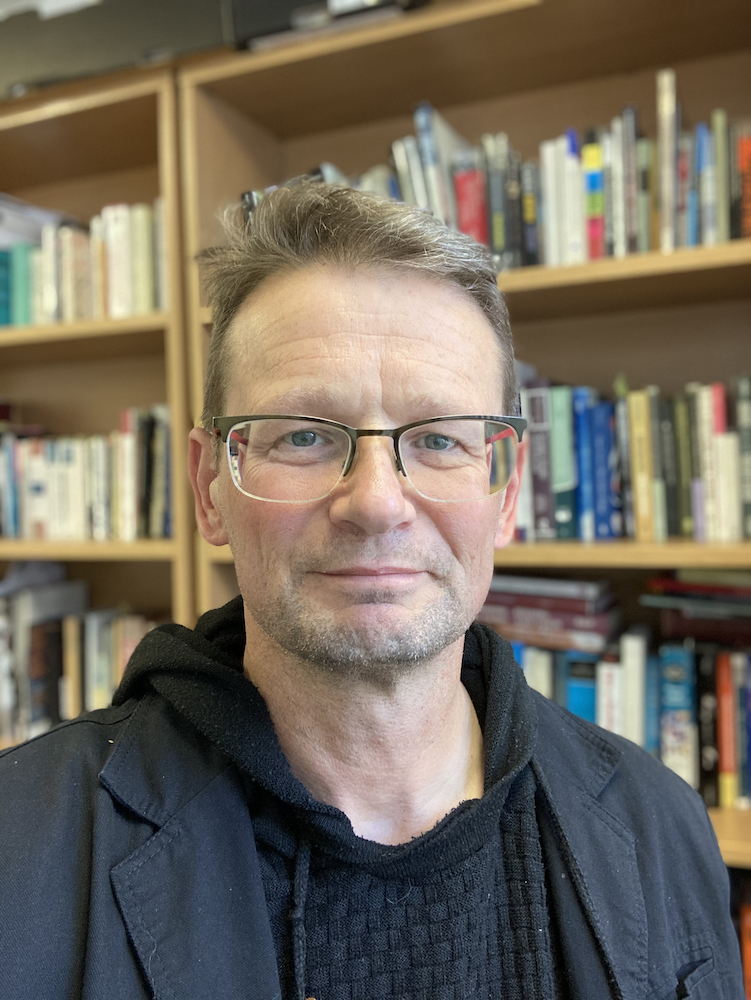
Nicholas Reyland
Professor of Music and Head of Undergraduate Programmes
-
Simon Parkin
Senior Lecturer in Music and Deputy Head of Undergraduate Programmes
-

Annika Forkert
Senior Lecturer in Music and Deputy Head of Undergraduate Studies
Student Spotlight
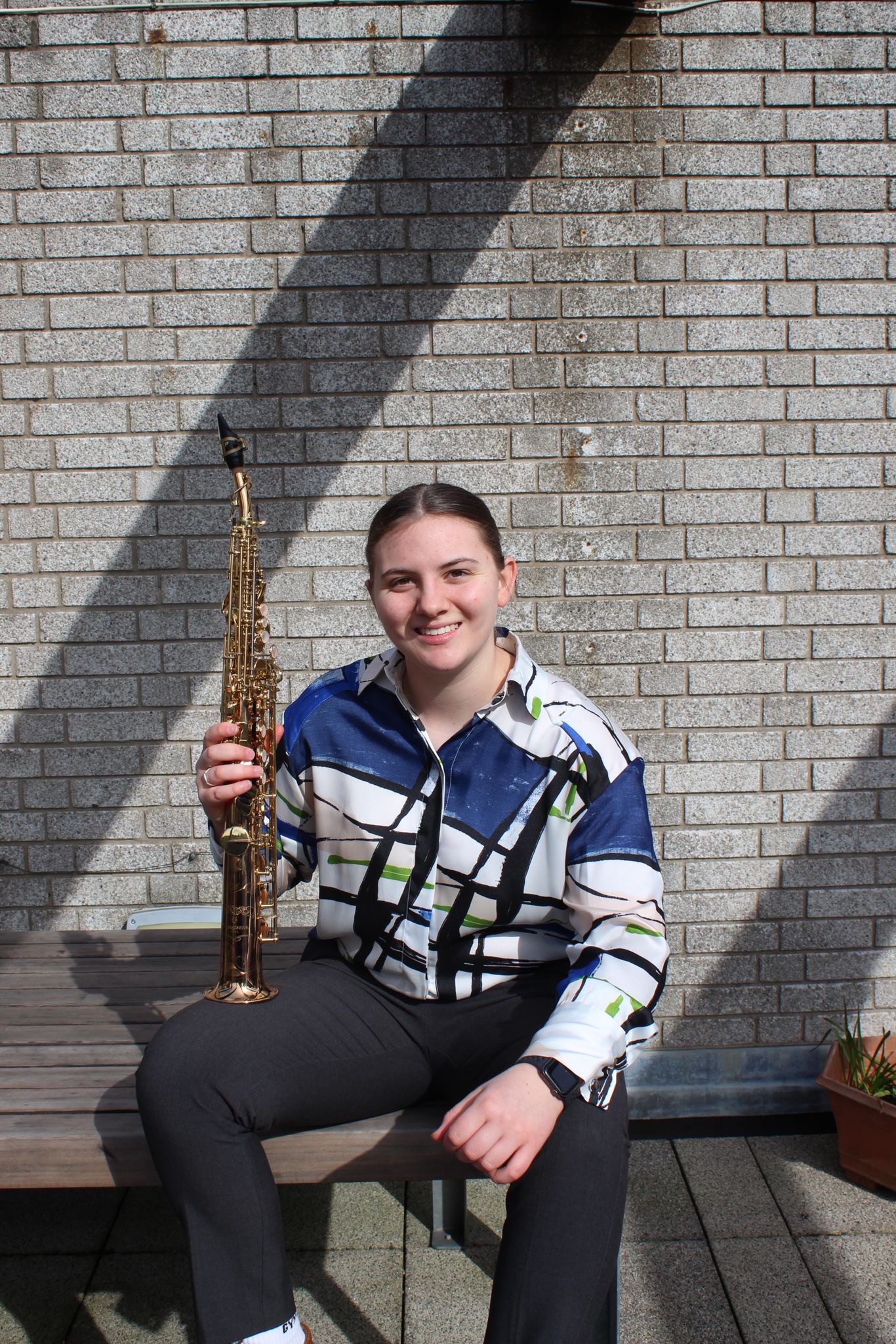
Emily Leavy | Saxophone
‘Being a student at the RNCM allows you to have some of the most amazing experiences and opportunities as a musician. The best part is that if you apply on the ‘classical’ course it doesn’t stop you from getting involved in multiple different genres. RNCM is the place to be for opportunities, inclusivity and community.’
Additional Information
Accommodation
All applicants who accept a guaranteed offer before 9 February will be reserved a room in Sir Charles Groves Hall of Residence, which they will be invited to book in the months following their audition. Private en-suite rooms are grouped in clusters of four with shared kitchen facilities.
Scholarships and Bursaries
We provide over £3m in the form of student scholarships and bursaries each year.
All applicants are automatically considered for a scholarship, and these are awarded based on performance ability and potential demonstrated at audition and interview. Scholarship awards are for the first year of study only (unless specifically stated otherwise).
A limited number of bursaries are also available for International and postgraduate students, allocated based on need and merit. If you’re successful in gaining a bursary, this will be deducted from your tuition fees, leaving you with a net balance to pay.
Undergraduate home students may apply for an Access Bursary if their income meets the published criteria. To apply for an Undergraduate Access Bursary, please contact Student Finance England (or the relevant local authority for your country). You need to apply as an income assessed student and you and your sponsors (usually your parents) need to consent to share their household income with the RNCM.
Tuition Fees
Tuition fees are split into two categories – home and international. Your fee status will be determined by the information provided within your UCAS Conservatoires application. Full guidance on tuition fee statuses can be found on the UKCISA (UK Council for International Student Affairs) website, but if you have any queries or think you have been assigned an incorrect status, please email [email protected] and we would be happy to undertake a full fee assessment with you.