Junior RNCM
Junior RNCM is a vibrant community of gifted young musicians aged eight to 18 who come together to develop their talent within the Royal Northern College of Music.
Every Saturday during term time, the RNCM is their home: a place to study with exceptional tutors, perform with like-minded people, and make long-lasting friendships. It’s also a place that looks to the future, teaching transferrable skills for life and creating a solid platform for further study at a conservatoire or university.
Being part of Junior RNCM is special. Students often say their time spent with us is their favourite part of the week and many tutors are proud alumni of the school. The varied curriculum ensures that everyone who trains with us receives an outstanding music education within an environment full of opportunity.
Key Information
Age: 8-18
Applications Open: 29 Jan
Applications Close: 5 Mar
Auditions: Mar-Apr each year
Open Day: Feb each year
Programme Details
We want all our students to reach their full potential, which is why we encourage them to approach Junior RNCM with professionalism, commitment, and determination.
Our day runs from 9.30am until 4.30pm and includes intensive individual tuition and ensemble coaching from a dedicated team of tutors. Internationally renowned artists also present masterclasses throughout the year, heightening the breadth of training and different musical perspectives we are proud to offer.
In addition to principal study, students receive tuition on a second instrument (usually piano) as we recognise that diversifying a student’s learning provides opportunities to enhance musicianship, both individually and with others.
Practice
To maximise the benefit of the teaching they receive each Saturday, students at all levels are expected to devote time to regular practice during the week. We understand that this can be difficult, but our tutors are skilled in helping students establish a routine that works for them.
Curriculum
Except for our youngest musicians, all students undertake the full curriculum each week. This includes:
Principal Study (1 hour) and Second Study (45-mintes) options include:
- Baritone Horn
- Bassoon
- Cello
- Clarinet
- Composition
- Conducting
- Cornet
- Double Bass
- Euphonium
- Flute
- French Horn
- Guitar (classical)
- Harp
- Jazz Piano
- Oboe
- Organ
- Percussion/Timpani
- Piano (solo)
- Recorder
- Saxophone
- Tenor Horn
- Trombone
- Trumpet
- Tuba
- Viola
- Violin
- Voice (Classical)
Academic Studies includes:
- Musicianship/Improvisation
- Theory/Harmony
- Composition/Arranging
- Advanced Aural/Advanced Compositional Analysis
Chamber music coaching includes, for example:
- Guitar Duo
- Jazz Quintet
- Piano Duo, Trio, and Quintet
- Percussion Duo
- Recorder Sextet
- Saxophone Quartet
- String Quartet
- Trombone Quartet
And at least one of the following (as directed by the Head of Junior Programmes):
- Big Band
- Brass Band
- Percussion Ensemble
- Symphony Orchestra
- Wind Orchestra
- Vocal Ensemble
Completing the full programme requires exceptional technical ability and physical stamina, which is why we offer a Foundation Section for our youngest students. This shortened curriculum enables them to develop the necessary skills and resilience to join as full Juniors when the time is right, while still receiving an outstanding music education. It includes principal and second study tuition, Eurhythmics class, theory, and participation in the Foundation Choir.
The Team
-
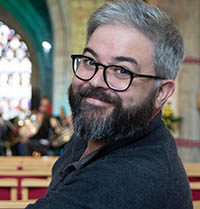
Aled Tudor
Head of Junior Programmes
-
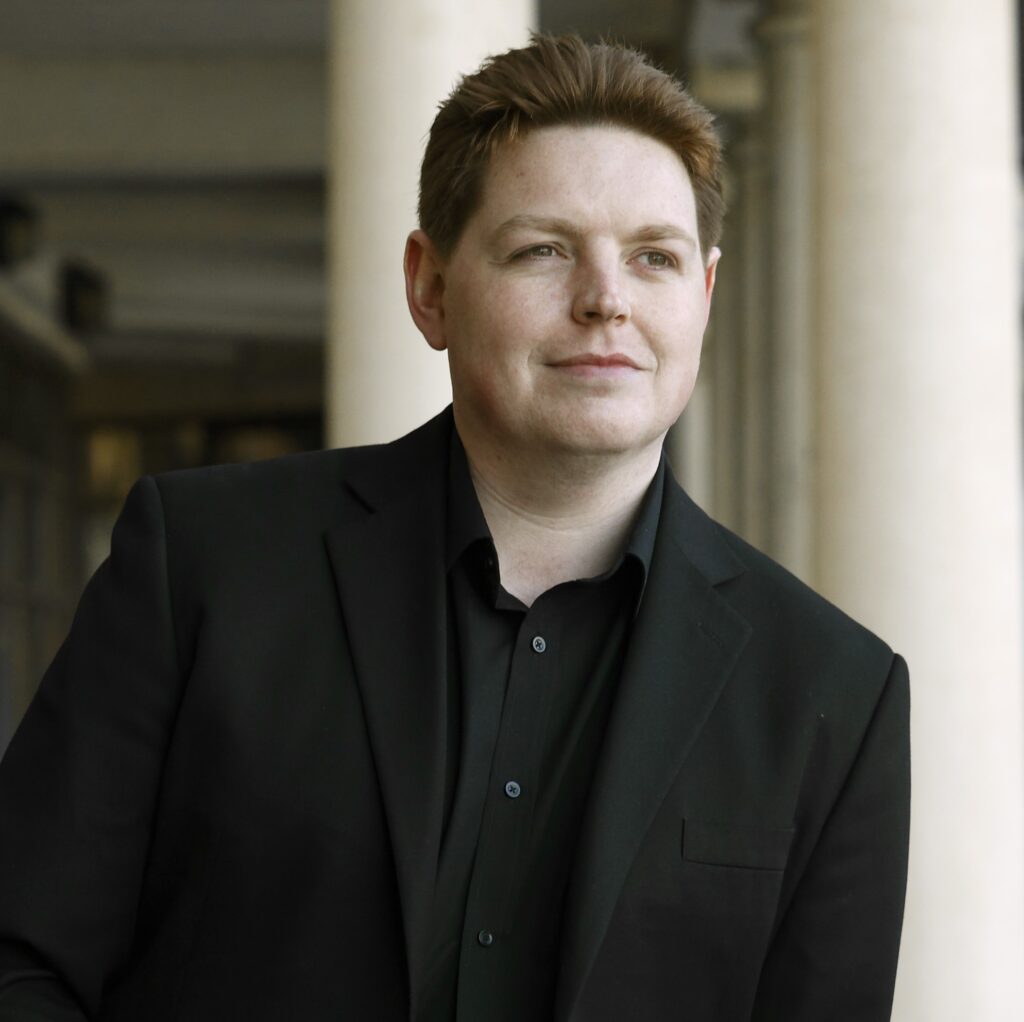
Eugene Monteith
Junior RNCM Manager
-
Catherine Yates
Deputy Head of School of Strings, Professor of Violin
-
Anne-Marie O’Farrell
Professor of Harp
-

Helen Varley
Junior RNCM Tutor in French Horn
-
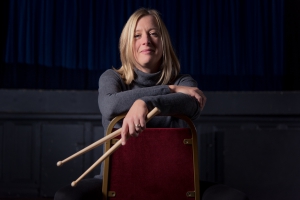
Andrea Vogler
Professor of Percussion
Entry Requirements and Fees
The specialised musical training we offer means that entry to Junior RNCM is highly competitive. We receive many applications from exceptionally talented young musicians and those accepted usually study with us for a minimum of two years.
Typically, successful candidates possess a combination of musicality, commitment, and the potential to pursue music at conservatoire level. We know that the musical achievements of each applicant will vary depending on age, but we expect our younger ones to have ABRSM Grade 5 distinction on their principal study instrument.
Applications for Junior RNCM open at the end of January each year and close before the March/April audition period. Applications should be made via the Junior Programmes Portal and there is a one-off audition fee of £30 for each applicant, collected after the application has been received.
Audition panels consist of the Head of Junior Programmes and a specialist in the relevant principal study discipline. An official accompanist will be provided, and we’ll ensure there’s time for rehearsal beforehand.
If you are undertaking a Junior RNCM audition, please prepare the following:
TWO contrasting pieces on their principal study instrument/voice and ONE piece on their second study (if applicable)
As part of the audition process, auditionees may be asked to do some sight-reading, answer questions on music theory, and take a short aural test. The panel will also have an informal chat with each applicant to learn more about their musical interests, previous experience, and future goals. There will be plenty of time for any questions they have about studying with us, too.
Audition dates are arranged by the Head of Junior Programmes, and you’ll hear back from us soon after your audition. Please note that all audition decisions are final.
For those offered a place, tutor placements will be arranged by the Head of Junior Programmes. We do encourage applicants to share any preferences they may have – we’ll make sure they’re thoughtfully considered as part of the process.
Each year, Junior RNCM students are re-auditioned to retain their place on the course. During this time, they must demonstrate satisfactory and significant progress in all areas of the curriculum in addition to ongoing punctuality, attendance, and commitment. There is also an opportunity to discuss timetables with the panel and set goals for the future.
Junior RNCM fees for 2026/27 are:
- Junior (Standard): £4,950
- Junior (Foundation): £3,850
Fees are payable in advance annually, termly, or by standing order over 10 months. Please note that we require one term’s notice if a student wishes to withdraw.
Scholarships and Bursaries
We have a limited number of scholarships and bursaries available for cases of financial hardship. Applications open once the audition process is over and offers have been made. Please contact the Junior RNCM Administrator on 0161 907 5264 for more information.
Open Days
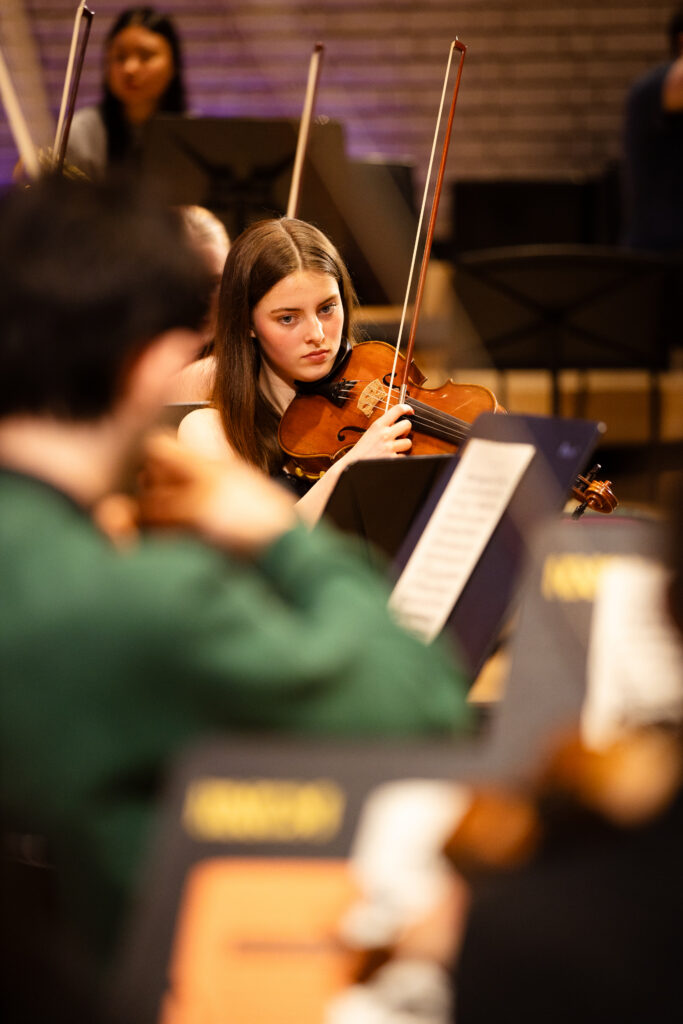
Junior RNCM Open Days take place in February each year. The day is split into two identical sessions from 10am-1pm and 1.30-4.30pm, providing an opportunity for you to sample life at Junior RNCM, hear more about the wonderful opportunities available, and listen to some of our students in concert.
The next open day will take place on Sat 6 Feb 2027. Details, including how to book, will be published here later in the year.
Junior RNCM Calendar 2026-27
All dates below are active JRNCM days, except half term holidays which are indicated in bold.
September 12 – December 5 (11 weeks)
| September | 12 | Induction Day (non-teaching) – Start: 09:30 new students and 10:15 for existing students |
| 19 | Concerto Auditions (am) Concert Hall | |
| 26 | ||
| October | 3 | New Parents Lesson Visits – first and second study lessons only |
| 10 | JRNCM Spotlight rehearsal (am) Concert Hall – Upper 6th / gap year students | |
| 17 | JRNCM Spotlight 12.30pm – Concert Hall – Upper 6th / gap year students | |
| 24 | HALF TERM HOLIDAY | |
| 31 | HALF TERM HOLIDAY | |
| November | 7 | Lunchtime Shorts auditions (am) Concert Hall (open to all students) |
| 14 | Lunchtime Shorts 12.30pm – Concert Hall | |
| 21 | Lunchtime Shorts 12.30pm – Concert Hall | |
| 28 | ABRSM practical exams | |
| December | 5 | Performance Day (non-teaching) |
January 09 – March 20 (10 weeks)
| January | 9 | Term begins |
| 16 | All Parents lesson visits – first and second study lessons only | |
| 23 | Chamber Music Showcase – Carole Nash Recital Room | |
| 30 | RNCM International Brass Band Festival | |
| February | 6 | Open Day |
| 13 | HALF TERM HOLIDAY | |
| 20 | JRNCM Spotlight Rehearsal (am) – Concert Hall | |
| 27 | JRNCM Spotlight 12.30pm – Concert Hall | |
| March | 6 | Lunchtime Shorts auditions (am) – Concert Hall |
| 13 | Lunchtime Shorts 12.30pm – Concert Hall | |
| 20 | Lunchtime Shorts 12.30pm – Concert Hall | |
| ABRSM Practical exams |
January 09 – March 20 (10 weeks)
| April | 10 | Term begins |
| 17 | JRNCM Spotlight Chamber Music Concert 12.30pm – Concert Hall | |
| 24 | JRNCM Spotlight rehearsal (am) – Concert Hall | |
| May | 1 | JRNCM Spotlight 12.30pm – Concert Hall |
| 8 | Conducting in Practice, for educators and developing conductors (Brass band & Symphony Orchestra) – delivered by Mark Heron | |
| 15 | JRNCM New Music Day | |
| 22 | HALF TERM HOLIDAY | |
| 29 | HALF TERM HOLIDAY | |
| June | 5 | Lunchtime Shorts auditions (am) – Concert Hall |
| 12 | Lunchtime Shorts 12.30pm – Concert Hall | |
| 19 | Lunchtime Shorts 12.30pm – Concert Hall | |
| 26 | ABRSM Practical exams | |
| July | 3 | Chamber Music Showcase – Carole Nash Recital Room |
| 10 | Performance Day |
Safeguarding
The RNCM is committed to ensuring the safety and welfare of children and vulnerable adults studying in the College by raising awareness of safeguarding and promoting a safe environment in which to learn and explore music.
The College’s Senior Designated Person responsible for safeguarding is Emma Hilton-Wood, Academic Registrar, who can be contacted on 0161 907 5361 or by email at [email protected]. You can also contact the College’s Deputy Designated Safeguarding Lead Paul Hynes on [email protected].
Our relevant policies are available for download on the College’s Safeguarding page.
Junior RNCM FAQs
Who attends the Junior RNCM?
Our students generally range in age from eight to 18 and come from all walks of life and a wide catchment area. We typically have around 200 talented and highly motivated musicians as students at any one time. They all have one thing in common: they are ordinary young people with an extraordinary talent.
Am I experienced enough to apply?
As a rough guide, we are looking for at least ABRSM Grade 5 with distinction, though we appreciate that some of our younger applicants may not yet have attained this. One of the key things we look for is the ability of our potential students to cope with and thrive in the intense and rewarding environment here at Junior RNCM. If you’re unsure, talk to your music teacher about your abilities or visit our Open Day and chat to some of our staff members.
Is there a cut-off age for applications?
We normally consider the beginning of Year 12 to be the last point of entry as we prefer students to be with us for a minimum of two years. There have been instances where students have joined in Year 13 and remained with us for a gap year.
Will I have to change my current teacher?
Yes, and this is something that may need careful consideration prior to your application. Our students are not permitted to have instrument lessons with other teachers as this may lead to conflicting advice.
Will I be able to take part in ensembles outside Junior RNCM?
Yes, providing that this leaves enough time for practice during the week.
Do students of all ages have the same timetable?
No, our younger students have a shorter curriculum, at a lower cost, than our older students – this is our Foundation Section. Foundation Section students move onto a fuller timetable when they can complete a full day’s activities. Each student’s timetable is tailored to their specialism.
Will I be expected to go on to study at a conservatoire or university music department?
Around three-quarters of our leavers go on to study music, but recent leavers have also gone on to study subjects such as medicine, engineering, English, philosophy, and law.
Do I have to study the piano?
Most of our students choose to study the piano as it provides them with a strong platform for other areas of musical study (theory, composition etc) but this is flexible according to the strengths of each individual.
Can I take ABRSM examinations at the Junior RNCM?
Yes, students can take ABRSM examinations, but this is not compulsory. ABRSM practical exams are only taken on the recommendation of a student’s tutor, and not normally within the first term with a new teacher. Our students are entered for exams directly by Junior RNCM, and parents are subsequently invoiced for fees. We advise students not to take two practical exams in one session.
Is there any financial support available?
We try to make Junior RNCM accessible to all talented and gifted musicians, regardless of their financial circumstances. For those who need assistance, there are a number of scholarships and bursaries available.
If my child is not ready for Junior RNCM, are other opportunities available?
RNCM Young Projects are part of the RNCM’s portfolio of activities for young people aged five to 18, with the aim of offering high-quality opportunities to develop musical and technical skills and creativity. For more information, please see the RNCM Young Projects pages.
Can I speak to someone about options?
Yes, if you’d like to learn more about Junior RNCM, please contact our administrator on 0161 907 5264 or email [email protected].