Advanced Artist Diploma (Level 8)
The Level 8 Advanced Artist Diploma is a 12 month programme intended for performers, composers and producers pursuing careers as professional artists.
With an established track record of high level artistic practice, students on the AAD programme will develop their skills, critical awareness, and artistic identity through immersive self-directed study and engagement with diverse audiences.
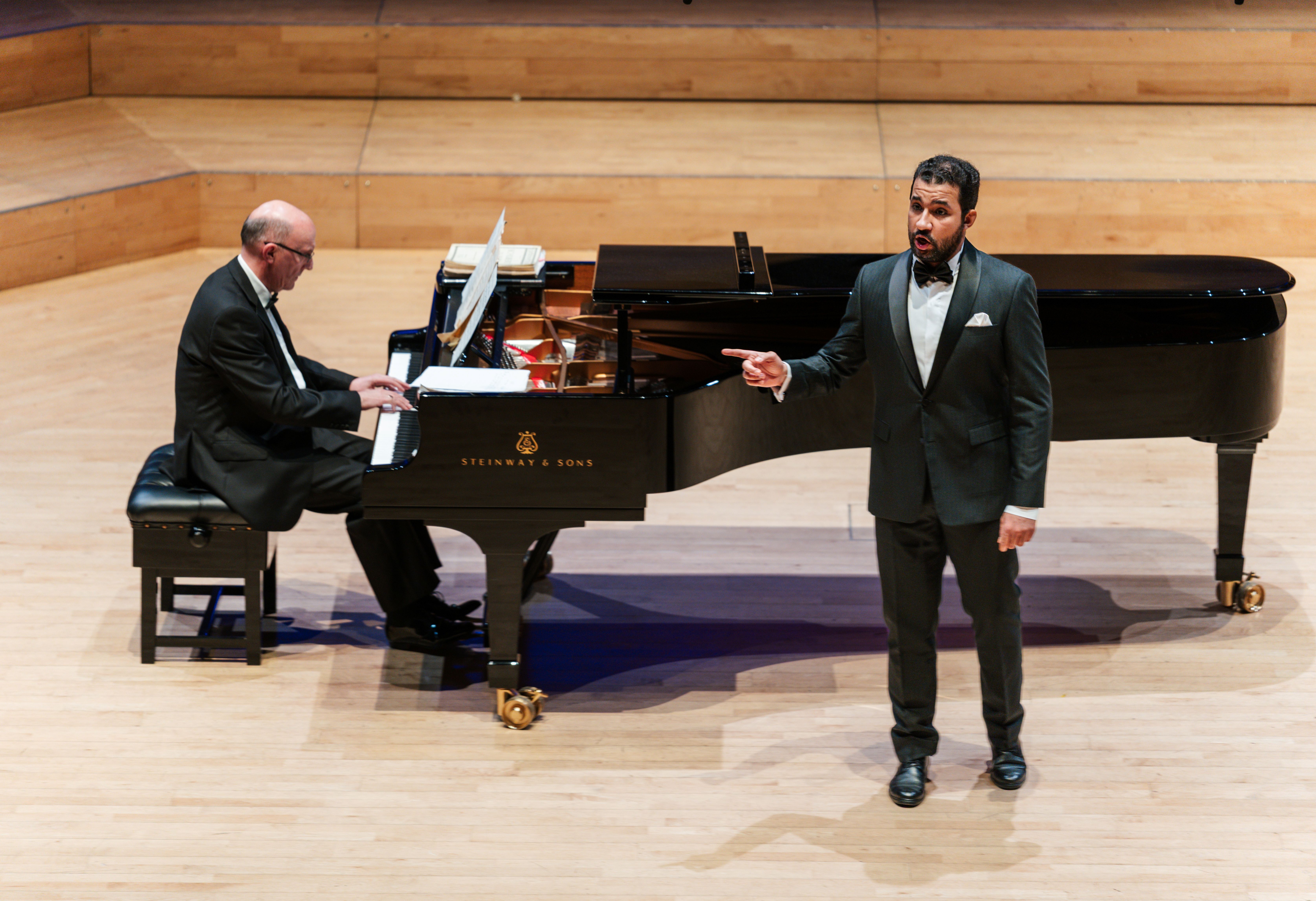
The programme centres on an artistic research project, devised by the student with support from a principal study professor and an artistic supervisor. Assessment is based on a final portfolio submission, which may take a variety of forms, such as a recital, a recording, or a set of compositions. On a Level 8 (doctoral level) programme, it is expected that candidates demonstrate a high level of autonomy in devising, preparing, and executing their projects, and that the final portfolio makes a novel contribution to their field of artistic practice. For further information, please contact Tom Parkinson (Head of Doctoral Programmes), by emailing [email protected].
Programme Overview
Duration: 1 year full time
UCAS Conservatoires Code: 550F (full time) and 550P (part time)
Tuition Fees
2027 Entry
Applications open: 9 July 2026
Deadline for on-time applications: 13 January 2027
Entry Requirements
Applicants for the AAD are normally required to hold a good (Distinction or Merit) master’s qualification in a relevant subject. They will also be considered for a place on the programme if they expect their master’s qualification to be awarded within the first three months after they have enrolled. All enrolments are expected to take place in September.
Applicants whose first language is not English must demonstrate English proficiency by achieving an IELTS score of 6.0 overall, with no individual component below 6.0. For more information, please see this government guidance page. For an unconditional offer to be made, the test must have been taken no more than 12 months prior to application; where offers are made conditional on the results of language tests, these must be available for checking prior to enrolment.
Potential applicants who do not meet these requirements should contact the Head of Doctoral Programmes ([email protected]).
Application Process
Preparing and submitting an application
All applicants are required to submit an application via UCAS Conservatoires, followed by a portfolio submission via Acceptd. Your Acceptd application should include the following:
- Project proposal, arranged under the following subheadings:
- Title
- Keywords (maximum 5)
- Aims (general) and objectives (specific)
- Brief summary description of artistic research project, including: an outline of where the work sits in relation to a) your own artistic practice and b) the work of others working in your field; a statement of how the work will make an original contribution to the applicant’s field of practice
- Proposed contents of the portfolio submission (e.g., recital recordings, scores, multitrack DAW projects)
- Indicative bibliography, and discography where relevant (no more than 15 items)
[Please note: the proposal, including tables, table and figure captions and bibliography or references (ancillary information), must be no more than 750 words]
- Two references (using the AAD Reference Request Form)
- Transcripts of previous qualifications
- Examples of artistic work:
Composition
Scores of examples of your own recent compositions with high-quality audio recordings where available. For further advice on the submission requirements for composition, please see the Audition Requirements page, or contact [email protected].
Performance
High-quality audio- and/or audio-visual recordings (links to online recordings are acceptable) of the applicant’s performances. For further advice on submission requirements for Performance in your area, please see the Audition Requirements page, or contact [email protected].
Production
High-quality audio- and/or audio-visual recordings (links to online recordings are acceptable) of the applicant’s production work. For further advice on submission requirements for Production in your area, please contact the Deputy Head of School for Popular Music, Dr Stuart McCallum ([email protected]).
Evaluation of applications and project proposals
The Programme Leader and relevant Head of School (or designated representative) will appoint at least one other member of staff to evaluate the applications. Project proposals will be evaluated on the extent to which they demonstrate:
- The applicant’s ability to formulate an original artistic project with clearly defined aims and objectives and scope
- The applicant’s ability to situate their proposed project in relation to their wider artistic practice, and the work of others in their field
- The applicant’s potential to undertake the proposed project and accompanying critical and reflective commentaries within the timeframe of the programme
- The potential for the project portfolio to make a valuable and original contribution to knowledge
- Language skills at a level required for completing the practice portfolio and accompanying critical commentary and reflective account
If the proposal is rejected, then feedback and further advice may be obtained through the Programme Leader prior to one re-submission of a revised proposal. No more than two submissions are possible. Applicants who receive a positive evaluation will be called for interview and audition (c. 60 minutes in total). The panel will consist of two members of staff with relevant expertise in the applicant’s area of artistic practice, along with the Programme Leader (or representative). After the interview and audition, the panel will convene and decide whether to make the applicant an offer of a place on the programme. Those applicants who are successful at interview will be contacted by RNCM Admissions with a formal offer of a place on the AAD programme.