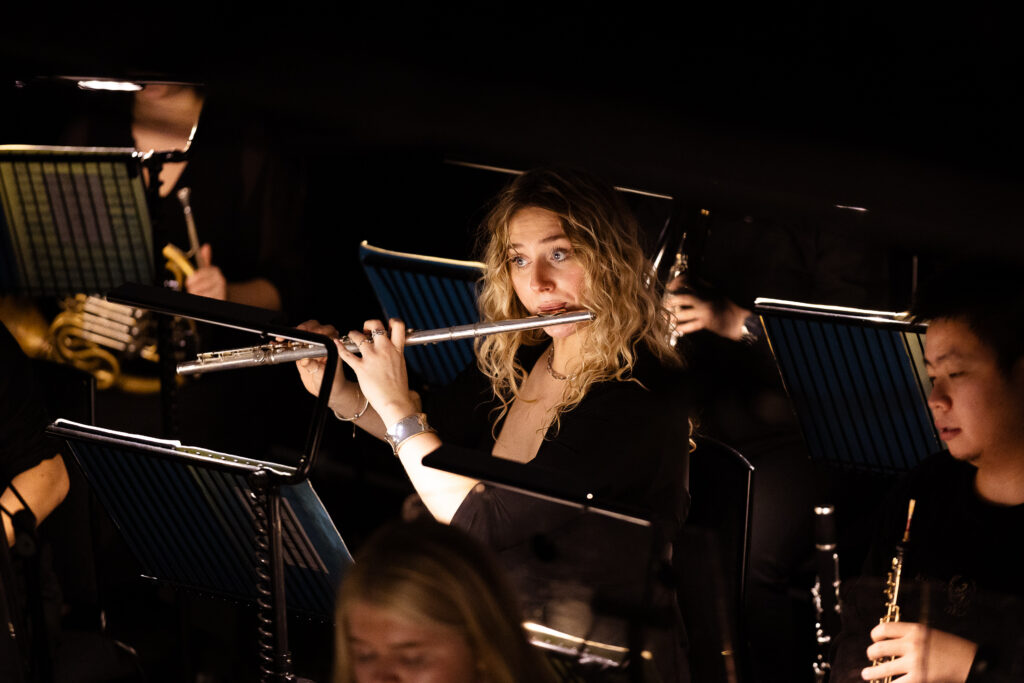
Master of Music
The RNCM’s Master of Music (MMus) is a flexible programme that meets the needs of the music professional and is ideal for those who have a strong vision of where their future is heading.
You’ll refine your creative and technical skills through one-to-one principal study training, specialist classes and masterclasses, lectures and seminars, and a range of performance opportunities – helping you to shape your desired career through a personalised approach to study. You’ll also have the chance to apply for valuable real-world experience through an external professional placement, and benefit from performance, audition, and networking opportunities with our professional industry partners.
Key Information
- Duration
- 2 years full time or 1 year intensive full time (excluding Conducting)
- Credits
- 180
- Application Opens
- 9 Jul 2026
- Application Deadline
- 1 Oct 2026
- Fees
- Fee guide
Entry Requirements
Qualifications and Standards
All MMus entrants must pass an RNCM audition and hold a good degree or equivalent (normally in Music: FHEQ Level 6). Candidates must be able to satisfy the College that they have already achieved an advanced standard in their main discipline area and have the potential to develop further towards a professional level of attainment.
Candidates who are not from a majority English-speaking country (as defined by UKVI) must meet the English language requirements for this course. These are IELTS 6.0, with no less than 5.5 in each component (or equivalent as defined by UKVI). Some options within the course may require IELTS 6.5 or 7.0.
Direct Entry
(Accreditation of Prior Learning)
In some cases, candidates who have completed relevant modules of a postgraduate (Level 7) qualification at a recognised Higher Education Institution may be considered for direct entry into year 2 of the RNCM MMus programme. In the first instance, please email details of your prior learning (summary of educational background and copies of transcripts) to [email protected].
Supporting Documents and Academic Assessment
All applicants are required to submit an academic transcript of undergraduate studies achieved to date and an example of prior written work demonstrating academic referencing in electronic format (e.g. Word document, PDF) via Acceptd.
Examples of prior written work must:
- Be in history or analysis of music (if you have not written an essay on music in your undergraduate degree, an example of writing, with referencing, on another topic, will be acceptable.)
- Written in English
- Total no more than 1000 words (a section drawn from a larger essay is acceptable)
- Be original work by the applicant (a plagiarism test will be conducted)
The work will be assessed by academic staff members using the following Marking Guidelines for Written Work.
Please note: all MMus applicants are also required to undergo an academic assessment once they succeed in their audition.
UK applicants may be required to undertake an Enhanced DBS (Disclosure and Barring Service) Check to participate in some professional placement modules within this course. Applicants from countries other than the UK, or UK residents who have spent six months or more in any non-UK country within five years of the course start date must additionally provide a police certificate of good conduct from the relevant country.
Programme Detail
The programme consists of 180 credits and is focused around Principal Study (composition, conducting, performance or popular music), which forms the major component in each year of study. Students also have the opportunity to pursue studies in a related Specialism preparing them for research degree-level study, specifically Artistic (practice-based) Research, Musicology, Music Education, and Music Psychology.
Routes Available
Composition: Builds on skills such as compositional craft, technique, and creative conception, and explores areas including interpretative and reflective skills, approaches to different repertoire, and enhanced presentation and communication.
Performance: Focuses on training in advanced level techniques, styles, and practices of musical performance or conducting, and the development of critical and reflective approaches to relevant repertoire. Assessment for Popular Music can include a combination of performance and original composition, at the student’s choice.
Course Codes
820F: Composition 2 years
823F: Composition 1-year Intensive
801F: Performance 2 years
805F: Performance 1-year intensive
807F: Conducting 2 years
701F: Popular Music 2 years
702F: Popular Music 1-year intensive
Principal Study Options
- Baritone Horn
- Bassoon
- Cello
- Clarinet
- Composition
- Conducting
- Contra Bassoon
- Cor Anglais
- Cornet
- Double Bass
- Drumkit (Pop)
- E-flat Clarinet
- Euphonium
- Flute
- French Horn
- Guitar (Bass) (Pop)
- Guitar (classical)
- Guitar (Electric) (Pop)
- Harp
- Harpsichord
- Oboe
- Percussion/Timpani
- Piano (collaborative)
- Piano (solo)
- Piano/Keyboards (Pop)
- Piccolo
- Répétiteur Studies
- Saxophone
- Singing
- Tenor Horn
- Trombone
- Trumpet
- Tuba
- Viola
- Violin
- Voice (Pop)
Forming the foundation of the programme, principal study focuses on enabling you to realise your true potential, both technically and creatively, through one-to-one tuition, group classes, masterclasses, and many additional creative and performance opportunities.
Whether you’re studying one principal study discipline or choosing to divide your tuition between two areas of specialism, you’ll work closely with your tutor(s) to develop a learning pathway that’s right for you. This will include personal goals, areas of strength, areas for development, repertoire planning, study materials, and methodologies tailored to challenge and develop you to the appropriate level.
You’ll also learn how to critically evaluate and perform a broad range of repertoire, inspiring a cultural connection between historic, contemporary, and progressive material. And – with an emphasis on peer learning and peer support – you’ll be encouraged to develop your own musical voice through composition and performance, to reflect, analyse, and draw on your wide scholarly activities, and to engage in constructive critique.
Joint Principal Study
Students who wish to study two disciplines may apply for joint principal study. This is available in the following combinations:
- Composition with any instrument from the School of Keyboard Studies, Strings, Wind, Brass and Percussion, or Vocal Studies and Opera;
- Any two instruments within the School of Strings (e.g. violin and viola); or
- Any two instruments within the School of Keyboard Studies (e.g. piano and harpsichord).
Module Map
1-Year Intensive
Principal Study 1 (60 credits) consists of intensive one-to-one tuition, masterclasses, group classes, lectures, and workshops. This solo performance component equips you with the breadth and depth of musical experience required for a career as a professional instrumentalist, singer, or collaborative pianist. All students have access to a mentor and professors who will support you in your choice of modules and discuss your career aspirations with you.
Plus one research module (30 credits) and three additional elective modules (3 x 30 credits)
2-Year Programme
Principal Study (no credits) consists of intensive one-to-one tuition, masterclasses, group classes, lectures, and workshops. This solo performance component equips you with the breadth and depth of musical experience required for a career as a professional instrumentalist, singer, or collaborative pianist. All students have access to a mentor and professors who will support you in your choice of modules and discuss your career aspirations with you.
Two elective modules (60 credits) drawn from a wide range of activities, enabling you to develop a portfolio of practical, vocational, and research-based areas of activity relevant to your own professional development.
2-Year Programme
Principal Study (60 credits) assessed either through traditional recital or composition portfolios, or through the flexibility of possible performance/composition assessment formats (e.g. major operatic roles or concerto performances, subject to approval) to count towards your final degree.
Repertoire Research (30 credits) through which you will undertake and present research into your chosen performance repertory or compositional activity delivered through seminars and one-to-one tutorials.
Elective module (30 credits) of supporting practical study drawn from a wide range of activities.
Specialisms
- Artistic Research
- Composition Pedagogy
- Instrumental Pedagogy
- Music Education
- Music Psychology
- Musicology
- Philosophy and Music
- Practice and Research in Science and Music (PRiSM)
- Vocal Pedagogy
Research Modules
Dalcroze in Context
This module explores how movement relates to music perception, learning, and performance within the field of Dalcroze studies. It connects Dalcroze practice with music education, therapy, and psychology. Students engage with a wide range of concepts and undertake a student‑led research project on an aspect of Dalcroze practice, theory, or history. It is recommended as a complement to Dalcroze Eurhythmics and Dynamic Rehearsal. Assessment is by written work.
Dissertation – Major/Minor
Students undertake original research under specialist supervision in artistic research, musicology, music psychology, or music education. The module supports reflection on musical practice as a performer or composer. Assessment is by a 5,000‑word dissertation (minor) or 10,000-word dissertation (major).
Research Lecture Recital
This module offers an in-depth exploration of the necessary skills for delivering an original lecture recital. Students are encouraged to pursue topics relevant to them as performers and composers, with practical emphasis on a range of delivery styles, supporting materials, and techniques of public speaking. Assessment is by 30-minute lecture recital and annotated bibliography (1,000 words).
Research Methods in Artistic Research, Music Education, Music Psychology or Musicology
This module introduces core concepts in each discipline. Students explore practice‑led research, empirical music‑psychology methods, historical and theoretical approaches within music education, and a broad range of musicological topics. Additional cohort lectures, plus opportunities to meet PhD students and visiting researchers, support preparation for future doctoral study. Assessment is by written work, including two PhD‑style proposals.
Repertoire Project
This module supports development of a final recital or portfolio by guiding students through writing a professional‑quality programme note and engaging with relevant scholarship. Assessment is by written work.
Optional Modules
Accompaniment
This module, not available to Principal Study Accompanists, offers regular performance opportunities and feedback. Content includes duo sonatas, song, orchestral reductions, and opera, with techniques for working in varied duo partnerships. Assessment is by practical test.
Arrangement
Open to all students upon successful application, this module provides tuition in arranging works for designated ensembles. Students may have their work performed or recorded by in‑house ensembles. Assessment is by portfolio with commentary.
Artistic Project
A self-directed, creative piece of work that enables students to explore custom performance concepts, interdisciplinary collaborations, or community music initiatives instead of following a standard solo recital track.
Composition Elective
Open to all except Principal Study Composers. Entry is via submission of previous work. Tuition develops technical, interpretative, and communication skills. Assessment is by portfolio.
Conducting Elective
This module develops clear and effective conducting technique. Assessment includes a self‑evaluation exercise, practical portfolio, and a final class performance.
Contemporary Songwriting
This module provides tools and strategies to build a continually developing songwriting and composition toolkit, using both conventional and unconventional approaches.
Cross-cultural Approaches to Musicianship
This module examines how different musical traditions, practices, and ways of learning across cultures shape our understanding and development of musicianship.
Dalcroze Eurhythmics and Dynamic Rehearsal
This practical course explores how music is experienced and expressed physically through movement. Students engage in technical, expressive, and creative work, with opportunities to apply these skills to repertoire. Assessment includes practical exercises and a written portfolio.
Electronic Experimental Ensemble
This ensemble combines pop‑trained and classically trained musicians to explore 21st‑century chamber performance practices. Through a collaborative workshop environment, students investigate influential movements such as Wandelweiser, Japanese noise, post‑free improvisation, and the European avant‑garde. Assessment includes group performance and individual viva voce.
Freelance Musician
This module builds entrepreneurial skills for a portfolio career. Workshops cover musicianship, programming, marketing, recording, business planning, and outreach project development. Assessment is via video project submission and viva voce.
Music and Environment
This module explores how musical creativity, sound, and listening relate to ecological themes, environmental issues, and our changing natural world.
Musicianship for Vocalists: Consort Singing
This module develops consort‑singing techniques across a range of styles, from early polyphony to contemporary repertoire. Students may apply as pre‑formed groups or individually. Assessment is through a group performance featuring prepared repertoire and quick‑study elements.
Practical Pedagogy
This module equips students with practical skills for teaching musicians of varying abilities, including musical observation, reflection, and communication. Delivered in partnership with the local education service, it includes placement opportunities. Assessment is by portfolio (including video documentation) and viva voce.
PRiSM MMus Pathway
This specialist pathway builds on the research of PRiSM, the RNCM Centre for Practice & Research in Science & Music. Students explore music and computation, including tuning systems, AI, sound synthesis, computer‑assisted composition, and probabilistic methods. The module includes creative coding, cross‑software communication, and an introduction to physical computing and computer‑vision interfaces.
Professional Audition
This module provides advanced training for professional auditions, addressing repertoire preparation, advanced reading skills, stylistic expectations, interpretation, and the psychological demands of auditioning. Assessment is by portfolio and viva voce.
Professional Placement
Students undertake mentored work experience in contexts such as orchestral professional experience schemes, arts administration, music and health, or recording. Placements can be individually negotiated. Existing partnerships include the Hallé, BBC Philharmonic, Manchester Camerata, and RNCM departments. Assessment is by portfolio.
Small Ensemble Performance
(Chamber Music / Small Jazz Ensemble / Historical Performance Ensemble)
This module develops the skills, repertoire knowledge, and ensemble techniques essential for professional‑level small‑ensemble performance. It includes ensemble coaching, focused classes, workshops, and intensive private study. Assessment is through performance and a written rationale.
Underrepresented Music and Musicians
This module explores the voices, traditions, and creative contributions of musicians and musical cultures that have been historically marginalised or overlooked, examining their impact and significance within a broader musical landscape.
Your Application
Applications for most RNCM programmes open in July and should be submitted using UCAS Conservatoires and Acceptd. The application process includes a number of stages, including an audition and interview.
Professors
-

Jennie Henley
Director of Programmes
-
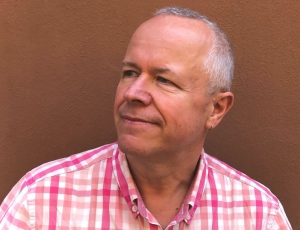
David Horne
Professor in Composition and Head of Graduate School
-

Simon Clarke
Senior Lecturer in Philosophy and Music and Deputy Head of Graduate School
-

Larry Goves
Head of School of Composition
-

Hannah McCabe
Fellow in Creative and Professional Practice
-
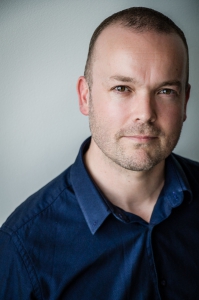
Gavin Wayte
Fellow in Creative and Professional Practice and Contemporary Music Lead Junior RNCM
Alumni Spotlight
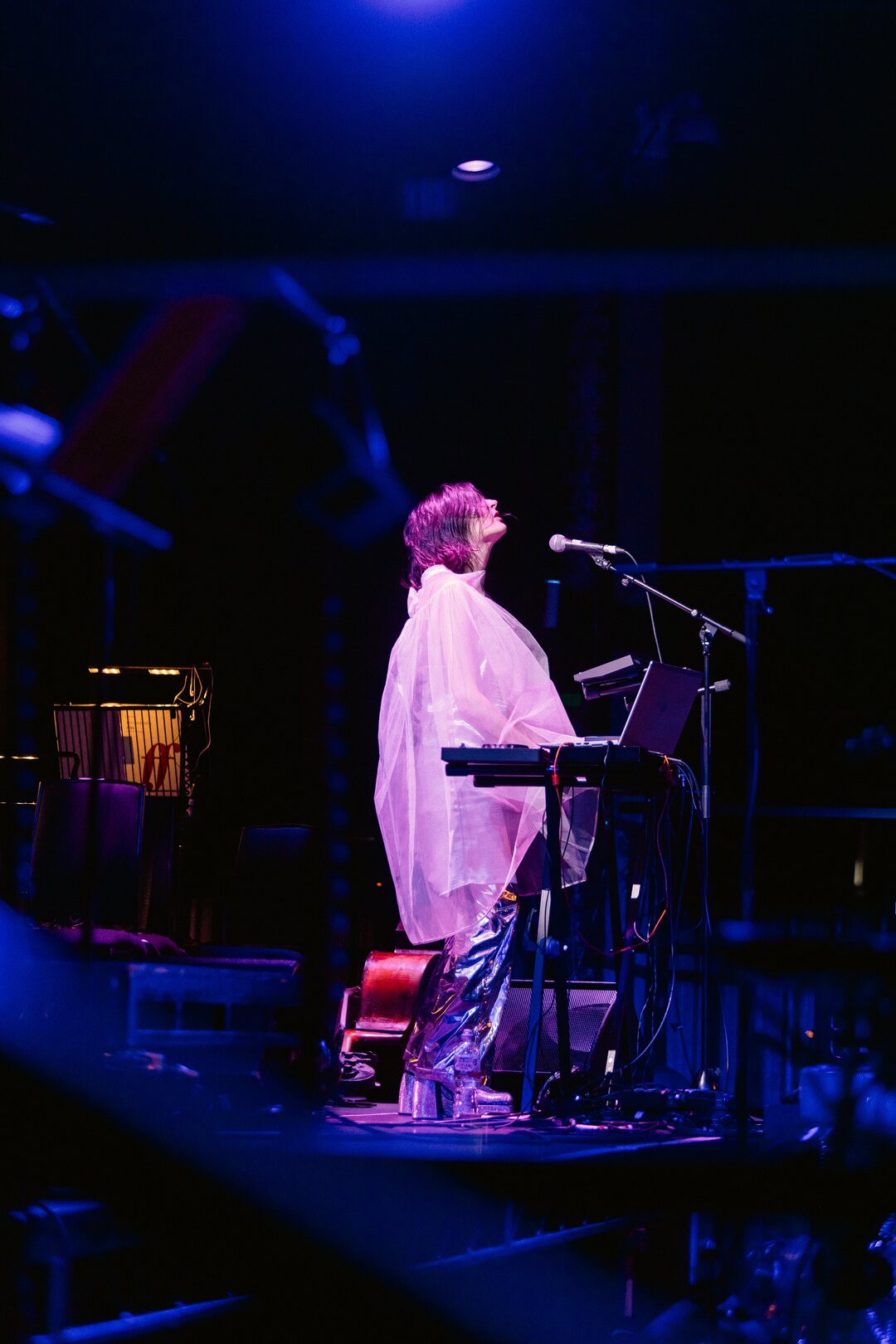
Anna Appleby | Composition
‘The RNCM’s fresh and innovative approach was the reason I moved to Manchester. My teachers on the MMus course guided me with so much insight and inspiration, creating a warm community in which to grow. The College also provided a great site for artistic experimentation and creative risk-taking – the best way to learn! I went on to work with companies such as Rambert, Glyndebourne, Dutch National Ballet, and many more, but it’s not surprising that I returned to the RNCM a few years later to do a PhD; it felt like coming back home.’
Anna Appleby is an RNCM Professor of Composition, opera composer, pop musician, and recent PRiSM Doctoral Researcher with the BBC Philharmonic Orchestra
Additional Information
Accommodation
All applicants who accept a guaranteed offer before 9 February will be reserved a room in Sir Charles Groves Hall of Residence, which they will be invited to book in the months following their audition. Private en-suite rooms are grouped in clusters of four with shared kitchen facilities.
Scholarships and Bursaries
All applicants are automatically considered for a scholarship, and these are awarded based on performance ability and potential demonstrated at audition and interview. Scholarship awards are for the first year of study only (unless specifically stated otherwise).
A limited number of bursaries are also available for International and postgraduate students, allocated based on need and merit. If you’re successful in gaining a bursary, this will be deducted from your tuition fees, leaving you with a net balance to pay.
Undergraduate home students may apply for an Access Bursary if their income meets the published criteria. To apply for an Undergraduate Access Bursary, please contact Student Finance England (or the relevant local authority for your country). You need to apply as an income assessed student and you and your sponsors (usually your parents) need to consent to share their household income with the RNCM.
Tuition Fees
Tuition fees are split into two categories – home and international. Your fee status will be determined by the information provided within your UCAS Conservatoires application. Full guidance on tuition fee statuses can be found on the UKCISA (UK Council for International Student Affairs) website, but if you have any queries or think you have been assigned an incorrect status, please email [email protected] and we would be happy to undertake a full fee assessment with you.