Sarah’s Story
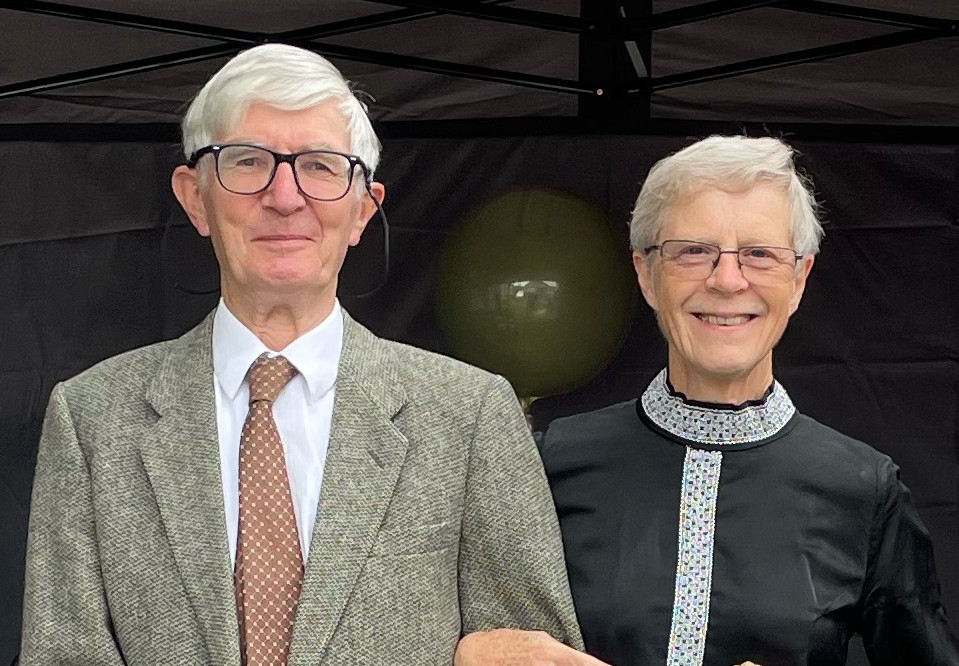
Sarah Davnall has been visiting the Royal Northern College of Music for more than 50 years. She and her husband, John, had moved to Manchester as the walls of the RNCM were still being built, and they first walked through the doors in May 1973.
It was to be the start of a long and thrilling relationship, and though John sadly passed in November 2023, he and Sarah will continue their connection with the RNCM through a legacy gift in both their wills. ‘Music is a hard profession, and even the finest musicians may find it difficult to establish themselves and make a living,’ says Sarah.
‘We can help by supporting the orchestras that employ them, and we do, but the place that gives them the best chance of career success is the college that trains them. The RNCM is one of the best at this, as shown by the success of so many graduates. Here, they are taught not just musical skills but also how to manage the practicalities of a life in music, from performance to business to health.
‘If the future of music and musicians is to be assured for long after we are gone, then the future of the RNCM also needs our support.’
Each year, the RNCM is kindly remembered by music lovers who choose to leave a gift in their will, creating a lasting legacy that supports generations of talented young musicians. These gifts help fund life-changing scholarships and bursaries, enabling students to focus on their studies, access transformative opportunities, and fulfil their artistic potential regardless of their financial circumstances. They also provide vital support where it is needed most, ensuring the College can continue to nurture exceptional talent for years to come.
In turn, our RNCM Legacy Club recognises those who have pledged to support us with a gift in their will by inviting them to special events, and opening up opportunities for them to speak directly with RNCM Principal, Professor Linda Merrick, and students impacted by legacy gifts.
For Sarah, the decision to leave a gift in her will to the RNCM is an acknowledgement of the gratitude she feels for the many decades of cultural experiences gained at the RNCM, a place where she and John gained their education in both historic and contemporary repertoire – from Ralph Kirschbaum performing Bach’s Cello Suites, to contemporary work which ‘taught us that new music can be ravishing as well as strange’, concerts by visiting ensembles, and a very merry version of Mozart’s Magic Flute. The College has been a great seat of learning, then, for both students and audiences.
‘We learned not only from the staff and student performances but also from the visitors the RNCM welcomed,’ Sarah recalls.
‘There were the wonderful three-day chamber music festivals, the specialist weekends, the operas, and many other student performances of all kinds. We lapped them up, awed and delighted by the quality of the performances we heard. And we were getting to know more and more students as we came in and out. This was such a joy – we felt part of a big RNCM family.’
It was the arrival of their own family that separated them from the RNCM for a short while. While concerts and events for and involving young audiences and families are a key part of modern programming and a vital way to engage young audiences with classical culture and music making, it was not always the case. Sarah laughs with fondness, though, about one particular Christmas concert that did tick that box – one conducted by a certain Fred Flintstone, she recalls… or at least, the RNCM’s former Head of Conducting Clark Rundell in a very convincing costume!
As their own children grew, she and John were thrilled to return to a reinvented RNCM and to step into the newly extended building with its ‘brilliant’ design that routed students, staff, and audiences into shared social spaces. The RNCM family welcomed them back, and Sarah and John were able to watch a generation of musicians take their first steps into professional life.
‘We started to spot our student friends in professional concerts and recitals, and in local orchestras like the Hallé, Manchester Camerata, Manchester Collective, and Manchester Baroque. I particularly remember our friendship with the student-led Project Jam Sandwich, after which we followed not only the stellar career of Abel Selaocoe but also all the other members of the group.
‘All these were truly emotional thrills. We felt positively parental. And as a parent, you want the very best outcomes for your children, and you want to do everything you can to help them towards those outcomes, both now and for as long as possible in the future. In most circumstances, that means spending your money. Accordingly, we became Friends of the RNCM and we responded to the various appeals.’
She and John would, in fact, go on to be founding members of the Principal’s Circle – a friendly group of music lovers, passionate about supporting exceptional young musicians and creating sustainable access to music for all. Students have benefitted from the work of the Circle through funded professional partnerships, investment in specialist equipment and state-of-the-art facilities, performance coaching and wellbeing training, and engagement with non-Western classical repertoire and teaching.
John said the new, feel-good initiative was a response to the ‘enthusiasm of students for their studies…rubbing off on us in an uplifting way’. And the family it created and fostered were also there for Sarah when John died unexpectedly. ‘The kindness, comfort and sympathy I received from those at the RNCM was a huge support, for which I am eternally grateful,’ she recalls.
‘I’m not sure when we first included the RNCM in our wills, but it was early on. This is partly in gratitude for the joy of the music and friendship that we have experienced for half a century, but it is mainly because it is so important that the RNCM family continues to flourish.
‘We hope and expect that the RNCM will last far longer than we do, and it will need support then as well.’
3 September 2026