
Book Release: Inclusive Pedagogy in Music Education
Music education can improve the lives and outcomes for all children and young people, says internationally renowned expert in music pedagogy Professor Jennie Henley in a new book, released at the RNCM yesterday.
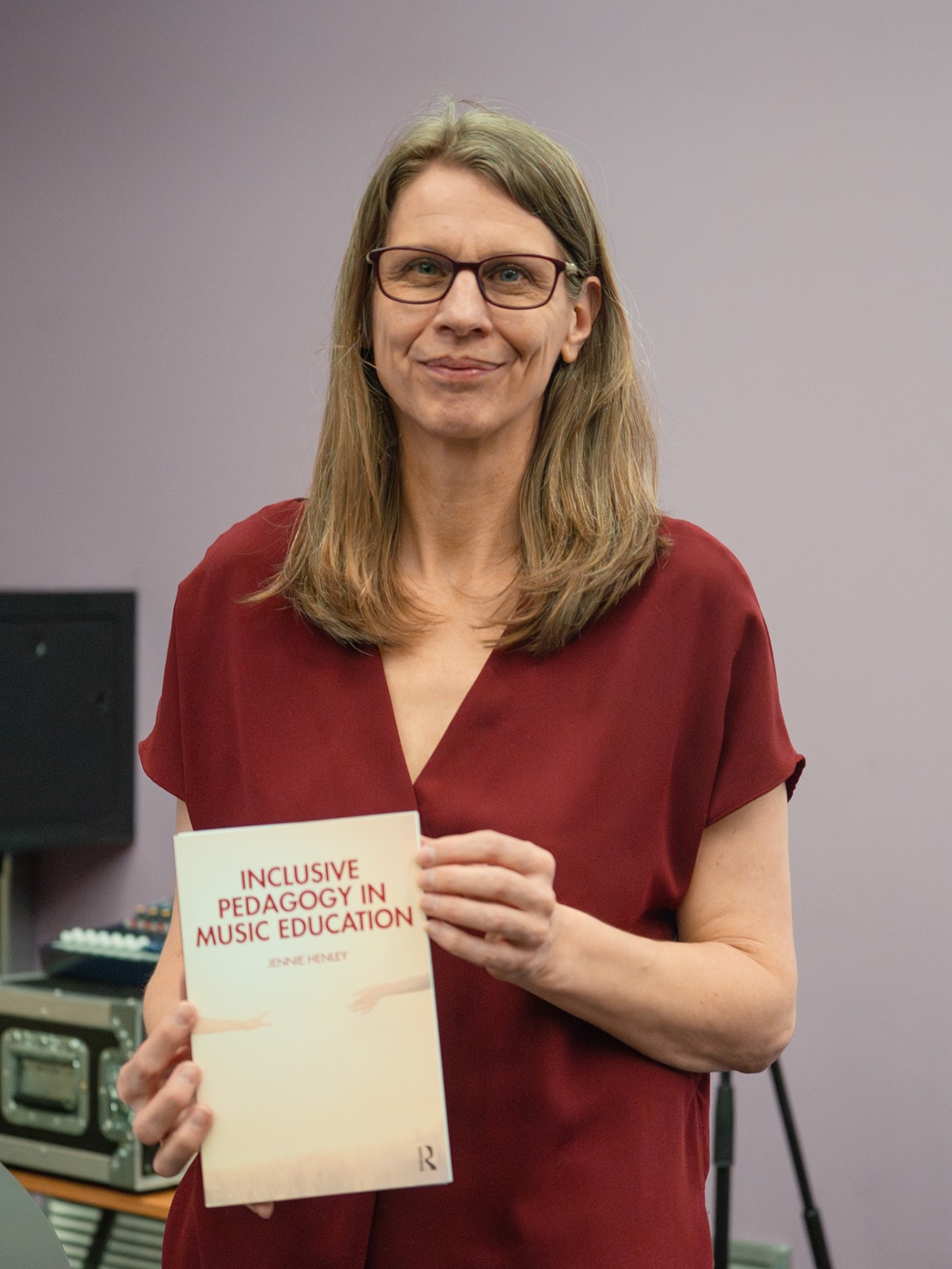 Drawing on her own childhood experiences and over 25 years’ experience across schools, ensembles, community projects, and teacher education, Professor Henley – who is Director of Programmes and Professor in Music Education at at the RNCM – believes music can play a vital role in the development and wellbeing of children, young people, and young adults from all backgrounds.
Her latest book, Inclusive Pedagogy in Music Education (Routledge, 2026), explores how our different musical backgrounds are a strength rather than a barrier, how simple shifts in teaching can open doors for more people to make, learn, and lead music, and how broadening what we mean by ‘excellence’ can remove hidden hurdles in music education.
Ahead of its release during a talk and Q&A, Jennie said: ‘The book comes at a time when working inclusively is more important than ever. Music connects people, it builds confidence, and it gives a different way for children and young people to learn how to work together, express themselves, and build emotional resilience.
‘As a child who grew up on state benefits in receipt of free school meals, then as a working musician and teacher for the past 30 years, I’ve seen the difference music can make to children, young people, and young adults from the most difficult backgrounds. My book is written with the conviction that every child deserves a fantastic teacher and shows how small changes in the ways of working musically with others can have lifelong impacts.’
Music education has been the subject of national and international media scrutiny and questions have been raised in Parliament about the current provision in England and Wales. Baroness Keeley, co-Chair of the Classical Music APPG, referred to the ‘music teacher recruitment crisis’ in a Lords Chamber debate last year, highlighting the ‘continuing and significant shortfall in the recruitment of music teachers, with an almost 60 percent shortfall against the Department for Education’s recruitment target last year’.
The Cultural Learning Alliance’s Report Card 2024 also recently claimed that 42 percent of schools no longer enter any pupils for music GCSE, and concluded that young people’s take-up of musical instruments and ensemble playing is now greatly determined by their socioeconomic background. An N8 Research Partnership report found that primary schools in England now spend less than £1.80 per pupil per year on creative opportunities, despite evidence that arts and creativity have social and emotional wellbeing benefits for children beyond education.
The independent Curriculum and Assessment Review (Nov 2025) concluded that music should remain a statutory part of the national curriculum for all pupils, and that the removal of the EBacc could provide more flexibility for schools to offer music as a GCSE option. Among its other recommendations for music education were: clearer progression, more diverse genres, and stronger foundations through Key Stages 1-3; a focus on reducing disadvantage, with improved access to instruments and tuition; a review of GCSE, A-level, and vocational qualifications to ensure ‘clarity and relevance’; and broader assessment models beyond exams that will seek to capture musical creativity.
However, in October 2025 the Government scrapped Initial Teacher Training (ITT) bursaries for music for the 2026/27 academic year. It also remains unclear what role the new National Centre for Arts and Music Education in England will play in the future of music education, and which organisation(s) will secure the tender to run it.
12 March 2026